

When training AI models for art, you need to consider creator rights, cultural sensitivity, and transparency. Using existing works without permission risks infringing on artists’ ownership and may reinforce biases or stereotypes. Respecting consent, fostering inclusive datasets, and ensuring fair attribution and compensation are essential. Addressing these ethical issues helps build trust and prevents harm. To learn more about how to navigate these concerns responsibly, continue exploring the key principles behind ethical AI art development.
Key Takeaways
- Obtain explicit consent from artists and content creators before using their work for AI training datasets.
- Ensure training data is diverse and representative to minimize biases and promote cultural sensitivity.
- Maintain transparency about data sources, provenance, and how AI models are trained and utilized.
- Implement safeguards to prevent generating offensive, harmful, or culturally insensitive content.
- Promote fair compensation, acknowledgment, and ethical engagement with creators whose work influences AI models.
Intellectual Property and Artist Attribution

Have you ever wondered who owns the rights to AI-generated art trained on existing works? When AI models learn from artists’ creations, questions about intellectual property arise. Legally, the original artist’s rights may be compromised if their work is used without permission. You might think the AI or its creator owns the output, but copyright laws are still evolving in this area. Some argue that artists deserve attribution or compensation when their work influences AI models, especially if their style or specific pieces are directly replicated. Others believe that the AI’s output should be considered new, independent art. Steering these issues requires careful consideration of legal frameworks, ethical standards, and respect for artists’ rights. Understanding the for-sale market for AI-generated art can also influence how these legal and ethical considerations are addressed.
Bias and Cultural Sensitivity in AI-Generated Art

As AI models generate art based on vast datasets, they can inadvertently reproduce biases and cultural stereotypes present in their training material. This means you might end up with images that reinforce stereotypes or misrepresent certain cultures. Such outputs can offend or marginalize communities, unintentionally perpetuating social inequalities. To address this, you need to scrutinize the data used for training, ensuring it includes diverse and representative content. Incorporating cultural sensitivity is essential; it helps prevent misappropriation and promotes respectful, inclusive art. Recognizing these biases allows you to critically evaluate AI-generated works and advocate for responsible AI development. Additionally, understanding the positive thinking principles from personal growth research can foster a more proactive approach to addressing potential ethical challenges. Ultimately, your awareness and proactive approach can help mitigate harm and foster more equitable, culturally respectful AI art.
Consent and Rights of Original Content Creators

As an original content creator, your ownership and rights over your artwork should be respected. You need to give clear permission for your work to be used in AI training, and you deserve proper recognition and compensation. Addressing these points guarantees that creators are fairly valued and their rights protected. Understanding color accuracy and its importance in visual representation can help advocate for ethical AI training practices that respect creators’ original work.
Ownership of Artwork
Ownership of artwork in the context of AI training raises pressing questions about consent and rights. When AI models learn from existing art, it’s essential to determine who holds ownership—whether it’s the original creator, the company training the AI, or others. You need to contemplate whether the artist’s rights are respected and if they’re compensated or credited appropriately. If you use artwork without clear ownership rights, you risk infringing on legal protections and ethical standards. Clear ownership rights help ensure creators retain control over how their work is used, preventing unauthorized exploitation. Additionally, understanding content licensing is crucial to ensure proper permissions are obtained and rights are maintained. As you develop or deploy AI art tools, prioritize transparency around ownership issues and respect creators’ rights to maintain ethical integrity and foster trust in your technology.
Permission for Usage
Do creators have a say in how their work is used to train AI models? Yes, they do. When you produce art, your rights include controlling how it’s shared and utilized. Using your work without permission infringes on your rights and can harm your reputation. AI developers should seek explicit consent before including your art in training datasets. This ensures your rights are respected and your work isn’t exploited without your approval. Clear permission processes empower creators to maintain control over their content. Without consent, your art could be used in ways you never intended, raising ethical concerns. Respecting permission is fundamental to ethical AI development, protecting creators’ interests and fostering trust. Incorporating content ownership principles into development practices helps ensure that creators’ rights are upheld. Ultimately, your consent should be a prerequisite for the lawful and fair use of your work in AI training.
Compensation and Recognition
Have you ever considered whether artists and creators deserve fair compensation and recognition for their work used in AI training? When AI models learn from existing art, creators often go unrecognized and unpaid. This raises ethical questions about respecting their rights and contributions. Proper acknowledgment guarantees creators receive credit for their original ideas, fostering a fair creative environment. Compensation can include licensing fees or royalties, giving artists control over how their work is used and monetized. Without recognition and fair pay, creators may feel exploited, discouraging future innovation. Respecting their rights encourages a sustainable art ecosystem and promotes transparency in AI development. Additionally, understanding the importance of self-awareness can help developers and users recognize the value of original human creativity. You should advocate for policies that ensure fair compensation and acknowledgment, balancing technological progress with respect for the creative community’s contributions.
The Impact of AI on Artistic Employment and Economy

As AI technologies become more capable of generating art, their influence on artistic employment and the economy grows more significant. You might find that AI tools streamline certain creative tasks, reducing demand for some traditional roles like illustrators or graphic designers. On the other hand, new opportunities emerge for those who leverage AI’s capabilities to innovate and expand artistic markets. This shift can lead to economic growth but also risks job displacement in specific sectors. You need to consider how AI’s integration affects livelihoods and the broader creative industry. Balancing technological advancement with economic stability becomes vital. Ultimately, the impact hinges on how artists, businesses, and policymakers adapt to these changes and foster an environment where AI enhances rather than replaces human creativity. Additionally, the development and deployment of ethical guidelines are crucial to ensure responsible use of AI in art creation.
Transparency and Accountability in AI Training Processes

You need to understand where the training data comes from and how it’s used, ensuring data provenance is clear. Ethical oversight mechanisms are essential to hold creators accountable and maintain trust in the process. Without transparency and accountability, the integrity of AI-generated art remains at risk. Incorporating lifestyle considerations such as creator well-being and societal impact can further enhance ethical standards in AI training.
Data Provenance Clarity
Ensuring transparency and accountability in AI training processes begins with clear data provenance. You need to understand where your training data originates, how it was collected, and whether it respects copyright and ethical standards. Clarifying data provenance helps you identify potential biases, gaps, or misuse that could influence the AI’s outputs. When you track the source of every data point, you can better assess its quality and relevance, making informed decisions about data inclusion. This transparency reassures artists and users that the AI model isn’t relying on questionable or proprietary materials without permission. By prioritizing data provenance clarity, you foster trust and uphold ethical standards, ensuring your AI training process is responsible, fair, and resistant to hidden biases or unethical practices. Additionally, understanding the concept of Fokos can provide deeper insight into the importance of ethical foundations in AI development.
Ethical Oversight Mechanisms
Implementing ethical oversight mechanisms is essential for maintaining transparency and accountability in AI training processes. These systems ensure you can identify biases, track data sources, and verify compliance with ethical standards. Effective oversight involves regular audits, clear reporting structures, and stakeholder involvement. To illustrate, consider the following:
| Oversight Feature | Purpose |
|---|---|
| Transparency Reports | Share training data and methodologies |
| Bias Detection Tools | Identify and mitigate biases |
| Audit Committees | Review ethical adherence |
| Data Source Verification | Ensure provenance accuracy |
| Stakeholder Feedback | Incorporate diverse perspectives |
Additionally, integrating principles from Bitcoin IRA practices can enhance the integrity of AI training by emphasizing secure data management and regulatory compliance.
Cultural Appropriation and Ethical Use of Diverse Art Forms
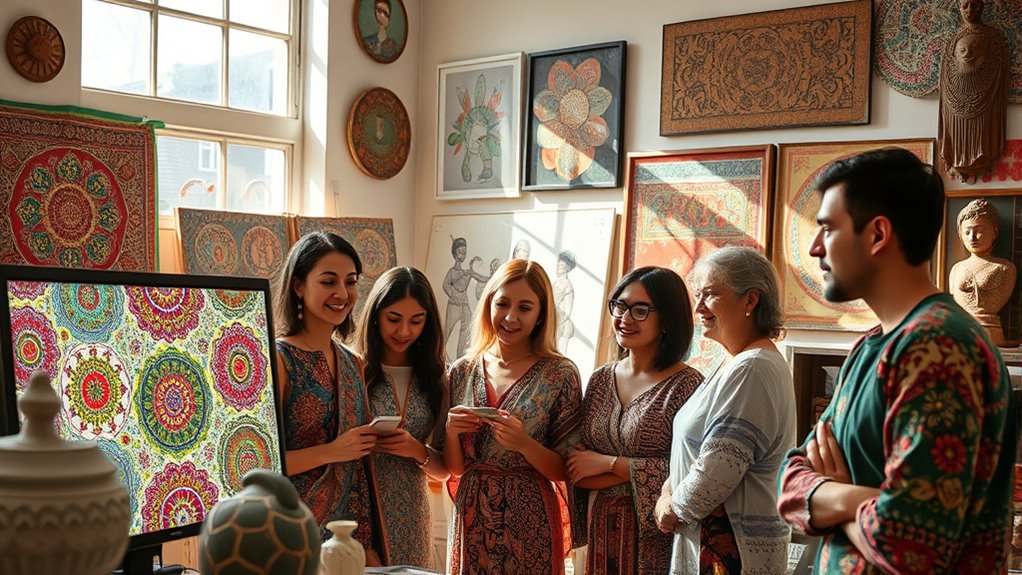
As AI models incorporate diverse art forms, questions about cultural appropriation and ethical use become increasingly important. You need to recognize that using cultural symbols or techniques without understanding their origins can perpetuate stereotypes or disrespect communities. Training data should include context to avoid misrepresentation. It’s essential to seek permission or collaborate with cultural creators when possible, ensuring their voices guide the use of their art. You must also remain aware of power imbalances that can lead to exploitation. Respectful engagement helps prevent cultural theft and promotes authentic representation. By consciously choosing diverse sources and valuing original creators, you uphold ethical standards and foster a more inclusive, respectful approach to integrating different art forms into AI-generated work.
Fair Access and Inclusivity in AI Art Technologies
Have you ever considered who has access to AI art tools and how this impacts creative opportunities? Limited access can reinforce existing inequalities, leaving marginalized communities behind. Ensuring inclusive access means more diverse voices shaping AI-generated art. To understand this better, consider the following factors:
| Factor | Impact | Example |
|---|---|---|
| Cost | Barrier for some users | High subscription fees |
| Technology | Limited device availability | Smartphones vs. high-end computers |
| Language Support | Excludes non-English speakers | Lack of multilingual interfaces |
| Infrastructure | Connectivity issues | Rural vs. urban access |
| Awareness | Knowledge gaps | Lack of info about tools |
Addressing these issues promotes fairness and enriches the artistic landscape by including diverse creators.
Mitigating Harm and Promoting Respectful Content

To guarantee AI-generated art respects societal values and avoids causing harm, you must actively address the potential for offensive, misleading, or inappropriate content. This involves implementing robust filtering systems that detect and block harmful outputs before they reach users. You should also curate diverse training data, ensuring it doesn’t reinforce stereotypes or biases. Regularly monitoring the AI’s outputs helps identify patterns of problematic content, allowing for timely adjustments. Encouraging user feedback is vital, as it provides real-world insights into issues you might overlook. Transparency about your AI’s limitations fosters trust and invites constructive critique. Ultimately, your goal is to create tools that inspire creativity without perpetuating harm, promoting respect and inclusivity in every piece of art generated.
Developing Ethical Guidelines and Industry Standards

Creating effective ethical guidelines and industry standards for AI-generated art requires collaboration among technologists, artists, policymakers, and community stakeholders. You need to engage diverse perspectives to guarantee the guidelines address fairness, transparency, and accountability. Establish clear standards for data sourcing, respecting intellectual property rights, and avoiding biases. Encourage open dialogue on consent and attribution, so artists and communities feel protected. As you develop these standards, prioritize flexibility to adapt to evolving technologies and societal values. Implementing industry-wide best practices helps prevent misuse and promotes responsible innovation. Your goal is to foster trust among users, creators, and the public. By working together, you can create a framework that balances technological advancement with ethical integrity, setting a foundation for sustainable growth in AI-driven art.
Frequently Asked Questions
How Can AI Training Processes Be Audited for Ethical Compliance?
You can audit AI training processes for ethical compliance by reviewing data sources to verify they’re lawful and respectful. Implement transparency measures, like documenting data origins and training methods. Regularly assess outputs for bias or harm, and involve diverse stakeholders for feedback. Using ethical guidelines and standards helps you identify potential issues early. Continuous monitoring and updates ensure your AI aligns with ethical principles, fostering responsible and fair use in art creation.
What Measures Ensure AI Respects Minority and Indigenous Art Forms?
You can guarantee AI respects minority and indigenous art forms by involving community representatives in the training process. Use diverse, culturally accurate datasets and seek ongoing feedback from those communities. Implement strict guidelines to prevent cultural appropriation, and regularly audit AI outputs for misrepresentation or bias. By prioritizing transparency and collaboration, you help protect and honor these unique artistic traditions while fostering respectful AI development.
How Is User Data Protected During AI Model Training for Art?
Imagine your data as a precious tapestry, woven with care to protect its integrity. During AI training, your data is encrypted like a secret code, shielded behind secure servers and access controls. Regular audits act as vigilant guardians, ensuring no breach occurs. You can trust that your information is handled with respect, kept private, and used ethically, like a treasured artwork preserved for generations to come.
Are There Legal Frameworks Regulating Ai-Generated Art Ethics?
Yes, legal frameworks regulate AI-generated art ethics. You need to follow copyright laws, ensuring you don’t infringe on original creators’ rights. Many jurisdictions are developing regulations around intellectual property and moral rights, so you should stay informed. Additionally, laws about transparency and attribution are evolving, requiring you to clearly disclose AI involvement. By adhering to these frameworks, you help promote responsible and fair use of AI in art creation.
How Do We Prevent Misuse of AI in Creating Deceptive or Harmful Art?
To prevent misuse of AI in creating deceptive or harmful art, you should implement strict guidelines and oversight. Use watermarking or attribution to identify AI-generated work, and establish clear policies on ethical use. Promote transparency with users about AI capabilities, and encourage responsible behavior through education. Collaborate with legal and ethical experts to develop standards, and actively monitor for misuse, taking swift action when violations occur.
Conclusion
So, next time you marvel at that AI masterpiece, remember it’s not just magic — it’s a delicate dance of ethics, consent, and cultural sensitivity. If we don’t get our act together, we might end up with art that’s more controversial than a cat in a tuxedo. Let’s endeavor for responsible creation, or soon, your favorite AI art might just be a hilarious, culturally clueless mess. Art’s future deserves a conscience, not just a clever algorithm.