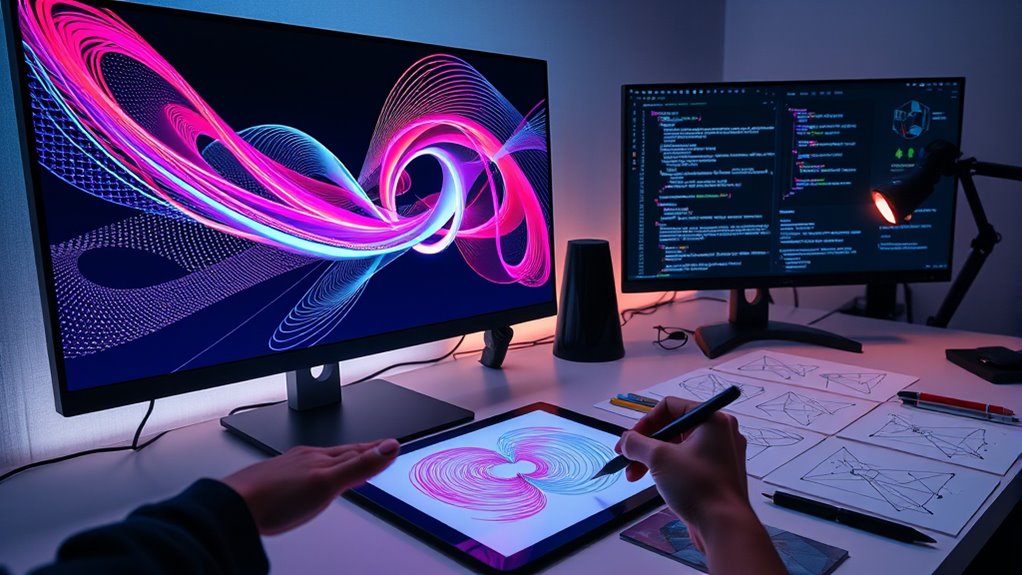
AI art generators work by using neural networks that mimic how the human brain recognizes patterns in images. They’re trained on large datasets of photos, sketches, and textures, helping them understand different styles and visual elements. When you give a text prompt, the network combines what it has learned to create a matching image. To see how all these pieces come together, keep exploring how neural networks and training data work in harmony.
Key Takeaways
- Neural networks mimic the human brain to recognize patterns in visual data and generate images.
- Training datasets of images help AI understand different styles, concepts, and visual elements.
- The learning process involves analyzing images and adjusting internal parameters for better accuracy.
- When given prompts, AI interprets keywords and combines learned patterns to create relevant images.
- The collaboration of neural networks and datasets enables AI art generators to produce detailed and diverse visuals.
Have you ever wondered how AI art generators create stunning images from simple prompts? The magic behind this process lies in sophisticated systems called neural networks. These neural networks are computer models inspired by the human brain’s structure, designed to recognize patterns and generate images based on learned data. When you input a prompt, the AI doesn’t just randomly produce a picture; it processes your words through its neural network to understand the concepts and styles you’re requesting. But before it can do this convincingly, it needs to learn from a vast amount of visual information. That’s where training datasets come into play.
Training datasets are huge collections of images that the AI uses to learn how different visual elements look and relate to each other. These datasets include everything from photographs and digital art to sketches and textures. During training, the AI analyzes these images, recognizing patterns, colors, shapes, and styles. It fundamentally develops an internal understanding of what makes a landscape look like a landscape or a portrait look like a portrait. This learning process involves adjusting the neural network’s internal parameters repeatedly to improve its accuracy and ability to generate realistic images. The larger and more diverse the training dataset, the better the AI becomes at creating a wide variety of art styles and concepts.
Once trained, the neural network has a kind of “visual memory” that allows it to interpret prompts and generate images that align with your description. When you type in a prompt—say, “a sunset over mountains”—the AI uses its learned patterns to synthesize an image that matches those keywords. It combines elements from its training to create something new, drawing on its internal understanding of how sunsets and mountains generally look. This process involves multiple stages where the AI refines and adjusts the generated image until it reaches a result that satisfies the underlying patterns it has learned.
In fundamental terms, neural networks act as the brain of the AI art generator, while training datasets are the foundation of its knowledge. Together, they enable the AI to translate simple prompts into detailed, often breathtaking images. The more complete and varied the training data, the more versatile and impressive the AI’s creations become. So, when you see a stunning piece of AI art, remember it’s the result of intricate pattern recognition and learned visual understanding, powered by neural networks trained on vast datasets of images. Additionally, retail hours for services like Game Cameron Toll or Costco Optometry are designed to accommodate various customer needs, ensuring accessibility and convenience in everyday activities.
Frequently Asked Questions
Can AI Art Generators Create Copyrighted Artwork?
AI art generators can create artwork that may infringe on intellectual property or artist rights. When trained on copyrighted images, they might produce pieces similar to existing works, raising legal questions. You should be aware that generating or using AI-created art without respecting original artists’ rights could lead to copyright issues. Always consider the source material and legal aspects to guarantee you’re not unintentionally violating intellectual property laws.
How Long Does It Take to Generate an Image?
It typically takes just a few seconds to a minute for an AI art generator to create an image, depending on your processing speed and hardware requirements. Faster hardware like high-end GPUs can substantially reduce wait times, while lower-end devices might take a bit longer. Overall, most generators are optimized for quick processing, so you usually get your artwork almost instantly once you input your prompt.
Are Ai-Generated Images Considered Original Art?
You might wonder if AI-generated images count as original art. The answer isn’t straightforward. While AI creates these images through algorithms, questions of artistic authenticity and creative ownership come into play. Some see them as innovative, others doubt their originality. Ultimately, it depends on your perspective—do you view the AI as a tool or a creator? Your stance shapes whether these images feel truly authentic and owned by you.
What Are Common Limitations of AI Art Tools?
You’ll find that AI art tools often face limitations like AI bias, which can skew results toward certain styles or subjects, and dataset diversity issues, meaning they might lack exposure to a wide range of art forms. These factors can lead to less originality and uneven quality in generated images. Understanding these limitations helps you set realistic expectations and guides you to create more diverse and authentic artwork with AI tools.
How Can I Improve AI Art Results?
You can improve AI art results by experimenting with different art styles and adjusting your color palette choices. Trust that small tweaks, like refining prompts or blending styles, can evoke stronger emotions and create more compelling images. Don’t be afraid to push boundaries—test various combinations until you discover what resonates best. Your creative input guides the AI, so stay curious and persistent to achieve stunning, personalized artwork.
Conclusion
So, now you know how AI art generators create stunning images out of thin air—literally! It’s funny how a bunch of algorithms can mimic human creativity so convincingly. Just remember, while you’re marveling at these digital masterpieces, the real magic is still happening behind the scenes, not in your hands. Who knew that in the future, your next favorite artwork might just be a click away—crafted by a machine with no soul?