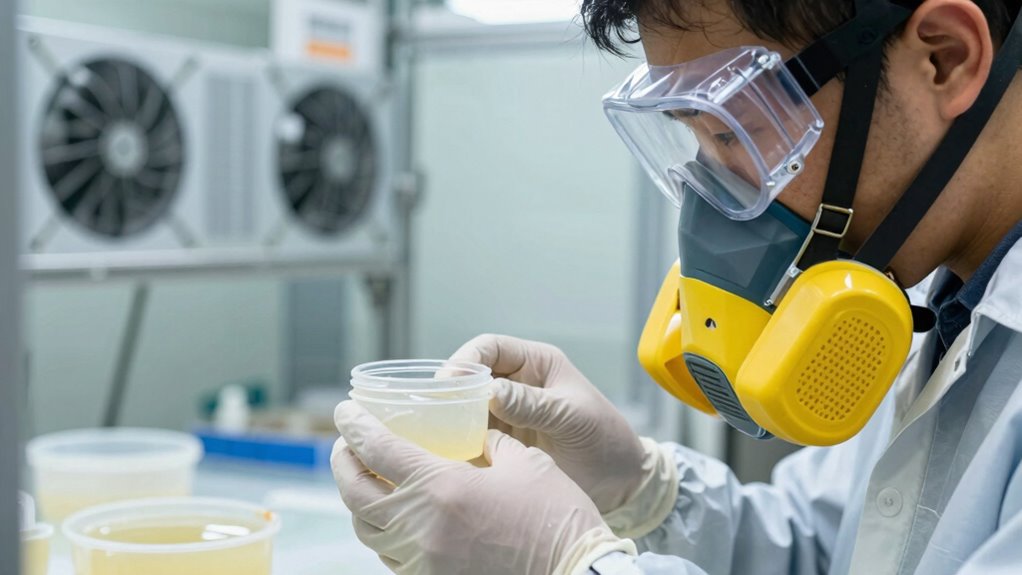
To stay safe when working with resin, you need proper ventilation and the right PPE. Make certain you use local exhaust systems, open windows, or powerful fans to direct fumes away from your breathing zone. Wear chemical-resistant gloves and protective glasses to prevent skin and eye contact. A respirator rated for organic vapors is crucial in enclosed spaces. If you follow these essential rules, you’ll minimize health risks and protect yourself effectively—discover more essential safety tips ahead.
Key Takeaways
- Ensure proper local exhaust ventilation or powerful fans to direct fumes away from breathing zones.
- Use appropriate PPE such as chemical-resistant gloves, goggles, and respirators rated for organic vapors.
- Work outdoors or in well-ventilated spaces to minimize inhalation of hazardous resin fumes.
- Always wash hands thoroughly after work, even if gloves were worn, to remove residual resin particles.
- Follow manufacturer guidelines for ventilation setup and PPE use to maintain a safe resin handling environment.

Resin safety is vital whenever you work with these versatile materials, as improper handling can pose health risks. Whether you’re pouring epoxy, polyester, or other resin types, understanding how to handle them properly is essential to protect your health. One of the most important aspects of proper handling is guaranteeing that your workspace has adequate ventilation. Resins emit fumes that can irritate your respiratory system, cause allergic reactions, or lead to long-term health issues if inhaled in high concentrations over time. To minimize these risks, you need to set up a well-ventilated area, ideally with local exhaust systems or powerful fans that direct fumes away from your breathing zone. Opening windows and using exhaust hoods can greatly improve air quality, but in some cases, you might need to invest in specialized ventilation equipment. Never underestimate the importance of ventilation requirements—it’s your first line of defense against inhaling harmful vapors. When working with resin, always follow manufacturer guidelines on ventilation. Sometimes, this means working outdoors or in a space with air exchange systems in place. If you’re in an enclosed environment, keep air moving continuously, and consider using air purifiers with activated charcoal filters to trap airborne particles and fumes. Proper handling also involves wearing the right personal protective equipment (PPE). Gloves, for example, are essential because resin can cause skin irritation or allergic dermatitis upon contact. Choose chemical-resistant gloves, and change them frequently if you’re working with multiple resin types or handling multiple projects. Eye protection is equally important—use goggles or safety glasses to prevent splashes from reaching your eyes. A respirator or mask rated for organic vapors can protect your lungs, especially if ventilation isn’t sufficient or if you’re working in a confined space. When handling resin, avoid eating, drinking, or smoking in your work area, as accidental ingestion of resin particles can be hazardous. Always wash your hands thoroughly after completing your work, even if you’ve worn gloves. Proper handling also means understanding the lifecycle of your resin—know how to store it safely, keep it away from heat sources, and dispose of leftover material according to local regulations. Additionally, being aware of ventilation requirements can help you choose the right setup for your workspace. By following these guidelines on ventilation requirements and using the right PPE, you markedly reduce your exposure to harmful fumes and skin contact. This not only keeps you safe but also ensures that your project progresses smoothly without health-related interruptions. Remember, resin safety isn’t just about protecting yourself today—it’s about establishing habits that promote long-term health and well-being every time you work with these materials.
Frequently Asked Questions
What Are the Long-Term Health Risks of Resin Exposure?
If you’re exposed to resin long-term, you risk developing chronic respiratory issues and skin sensitization. Without proper ventilation and PPE, your lungs could suffer from ongoing irritation, leading to breathing problems. Skin contact over time may cause allergic reactions or dermatitis. To protect yourself, always use appropriate PPE and ensure good ventilation, reducing the chances of these long-term health risks from resin exposure.
How Often Should Ventilation Systems Be Inspected and Maintained?
You should inspect and maintain your ventilation system at least every three to six months to guarantee ideal air quality. Regular inspections help identify issues like clogged filters or system malfunctions. During maintenance, calibrate the system to confirm it’s effectively removing fumes and particulates. Consistent upkeep ensures your workspace stays safe, minimizes health risks, and keeps the ventilation functioning efficiently, protecting you from long-term resin exposure.
Are There Specific PPE Requirements for Different Types of Resin?
Yes, you need to wear specific personal protective equipment based on the resin types you’re working with. For epoxy resins, gloves and eye protection are essential, while for polyester resins, respiratory protection might be necessary due to fumes. Always check the safety data sheets for each resin type to determine the appropriate PPE requirements. Proper PPE helps prevent skin contact, inhalation, and other health risks associated with different resin materials.
Can Resin Fumes Cause Immediate Health Symptoms?
Imagine inhaling a fog of ghostly whispers—that’s what resin fumes can feel like. Yes, they can cause immediate symptoms like headaches, dizziness, or respiratory irritation. You might think, “It’s just a little smell,” but those fumes can hit fast and hard. Protect yourself with proper ventilation and PPE, or you’ll be greeted by a sudden wave of discomfort that makes you wish you’d taken safety seriously from the start.
What Are the Best Practices for Safely Disposing of Resin Waste?
To safely dispose of resin waste, you should follow proper resin recycling procedures and handle it as hazardous waste. Always store leftover resin in sealed, clearly labeled containers and never pour it down the drain. Contact your local hazardous waste disposal facility for pickup, and avoid mixing resin waste with regular trash. This guarantees environmental safety and compliance with regulations, protecting both you and the community.
Conclusion
By prioritizing proper ventilation, wearing the right PPE, and staying informed, you protect yourself from resin hazards. Keep your workspace safe, your awareness sharp, and your habits consistent. Commit to safe practices, respect the risks, and stay vigilant every day. Your health depends on your actions—so breathe easy, gear up, and always stay cautious. Safety isn’t just a rule; it’s a mindset you carry with you, every time you work with resin.