TL;DR

Get the latest gadgets delivered free with Prime
- Fast, free delivery on millions of items
- Prime Video, Amazon Music and more included
- Member-only deals all year
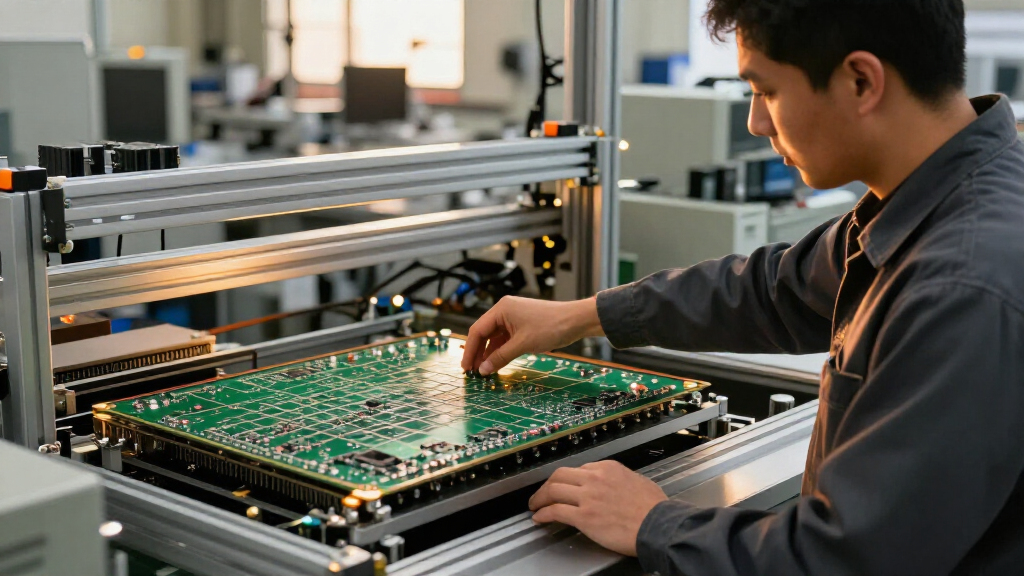
CircuitHub has publicly introduced The Grid, a Massachusetts factory system that uses automated machines and moving carriers to build varied printed circuit board orders. The company says it has served customers for five years, produces tens of millions of dollars of electronics annually and plans to increase capacity fivefold this year; its cost and delivery comparisons are company-provided examples.
CircuitHub has publicly revealed The Grid, a factory-scale electronics manufacturing system in Massachusetts that builds printed circuit boards (PCBs) on demand. The company says the system has already been operating for customers for five years and that it plans to expand capacity as orders exceed what it can currently produce.
The Grid is designed for high-mix, lower-volume manufacturing: orders that may include small quantities of many different board designs, rather than millions of identical products. CircuitHub describes a system in which levitating movers carry boards and components among machines that apply solder paste, place components, reflow solder and inspect the finished work. Software using learned models, AI agents and conventional optimization methods schedules production, according to the company.
CircuitHub says each board can take its own route through the factory, avoiding the conventional production-line changeovers and per-design setup it says make small, varied orders difficult to automate. The company says prototypes and production batches use the same equipment. It also says the system serves major companies as well as startups, but does not identify those customers in the report.
To illustrate pricing, CircuitHub compared a five-board order for a four-layer motor controller with 118 components per board, including 38 unique parts. The company says production on The Grid, with parts and delivery to a U.S. address, costs $630 and takes four days. It compared that with about $465 and a median nine days from a typical quick-turn shop in Shenzhen after shipping and U.S. tariffs. The figures are CircuitHub’s example, not an independently verified or universal price comparison.
A Faster Option for Small PCB Runs
The Grid addresses a manufacturing trade-off facing hardware teams: small or frequently revised orders can be costly and slow to make close to home, while conventional automated lines are better suited to large runs of the same product. If CircuitHub’s approach works at the scale and prices it describes, engineers could get varied board orders sooner without relying on a long overseas production and shipping route.
That can matter when a project is waiting on a handful of boards for testing, research or a production change. CircuitHub’s example puts its domestic order at $165 more than the Shenzhen alternative but five days faster. Whether that premium makes sense depends on the order, the value of the time saved, and the actual shipping, tariff and production costs. The comparison does not establish that domestic production is cheaper overall.
The announcement also points to a broader industrial question: whether automation can make Western electronics manufacturing practical for the many companies that need varied, smaller batches rather than mass quantities of one product. CircuitHub presents The Grid as evidence for that possibility, but independent operating data and comparable pricing would be needed to judge how broadly the model applies.
Products Worth Considering

Apple iPad Air (2025) 13‑inch Wi‑Fi 256 GB – Space Gray (M3 chip)

Amazon Kindle Paperwhite Signature Edition (12th Generation, 2024), 32 GB, Metallic Black

Amazon Kindle Paperwhite (12th Generation, 2024), 16 GB, 7-inch Display, Jade
As an affiliate, we earn on qualifying purchases.
Why Varied Board Orders Resist Automation
CircuitHub’s account describes a shift in electronics manufacturing over several decades: design work often remained in the United States while production moved overseas, where labor costs were lower. The company says automation has supported domestic manufacturing when businesses can justify dedicated lines for very large, repeated orders. It contrasts that model with products whose engineering teams need a few boards, a larger batch later, or a new revision soon after.
In a conventional line, switching among designs can require setup and manual changeovers, according to CircuitHub. The Grid’s proposed alternative is to move individual boards between production stations and schedule each board’s route through the facility. The company says this allows different designs to share equipment without changing over the line for each one.
CircuitHub says it has shipped more than 2.2 million boards, placed more than 150 million parts and served over 26,000 engineers across its business. It also says The Grid already produces tens of millions of dollars’ worth of electronics each year. These are company-reported figures; the announcement does not provide an independent audit or a detailed breakdown of production volumes.
“The Grid takes a different approach. Instead of a fixed line that has to be reconfigured for each product, it is one large robot.”
— CircuitHub, in its announcement
Costs, Capacity and Performance Details
The announcement does not provide an independent assessment of The Grid’s throughput, defect rates, uptime, or the range of board designs and order sizes it can handle. CircuitHub’s description of no per-design setup and its claims about scheduling are company statements; the report does not include outside verification or comparative factory data.
The cost example covers one specified five-board order and one comparison with a typical Shenzhen quick-turn shop. It does not explain how prices vary by board complexity, component availability, order size, shipping choices or changing tariffs. The company also does not name the EV maker, AI lab or technology companies it says are customers, or disclose how much of its reported annual production comes from The Grid alone.
The timing of the stated capacity increases is also not specified beyond “this year” and 2027 in the source report. The announcement gives no capacity measure or expansion milestones, so the scale and customer impact of the planned increase remain unclear.
CircuitHub Plans More Factory Capacity
CircuitHub says it plans to increase capacity fivefold this year, followed by another major increase in 2027. The company has not published the starting capacity, the target output, or a schedule for bringing added equipment online. Those details will help establish how much additional customer work the expansion can accommodate.
The company is also seeking employees and inviting customers to request quotes. Further information on production performance, order eligibility and pricing would help customers assess whether The Grid fits their work. For now, its public case rests on CircuitHub’s account of an established operation and a single illustrative comparison, alongside an expansion plan whose implementation remains to be seen.
Key Questions
What is The Grid?
The Grid is CircuitHub’s automated PCB production system in Massachusetts. The company says moving carriers take boards between machines for solder-paste printing, component placement, soldering and inspection.
Who is The Grid intended to serve?
CircuitHub says it is designed for orders with many different board designs and relatively small quantities, including prototypes and production batches. The report does not specify technical limits for board size, complexity or order volume.
Is production on The Grid cheaper than ordering from Shenzhen?
Not in CircuitHub’s example: the company quoted $630 for five boards on The Grid and about $465 from a typical Shenzhen quick-turn shop after shipping and U.S. tariffs. CircuitHub said its order arrived five days sooner; this single comparison does not establish prices for other jobs.
How long has The Grid been operating?
CircuitHub says the system has been running for customers for five years. It publicly described the operation in the supplied announcement but did not provide independent operating records.
What expansion has CircuitHub announced?
The company says it plans to increase capacity fivefold this year and make another major increase in 2027. It has not stated the baseline capacity, exact timing or planned output.
Source: circuithub.com