
TL;DR

Get the latest gadgets delivered free with Prime
- Fast, free delivery on millions of items
- Prime Video, Amazon Music and more included
- Member-only deals all year
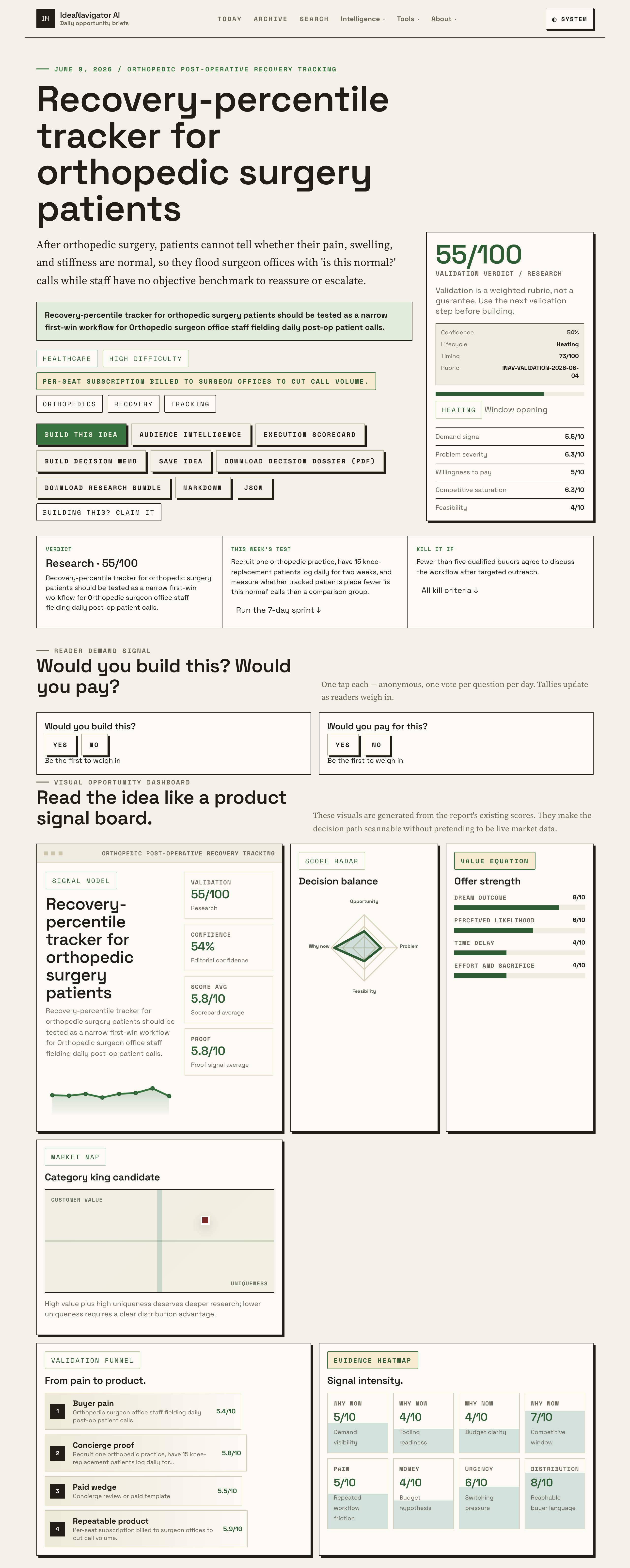
A new recovery-percentile tracker for orthopedic patients is being piloted to help patients monitor their recovery and reduce unnecessary calls to clinics. The tool plots patient data against anonymized recovery curves, potentially streamlining post-op care.
A new recovery-percentile tracker for orthopedic surgery patients is being tested in a pilot program to help patients monitor their recovery progress and reduce the volume of post-op calls to clinics. This simple digital tool allows patients to log key recovery metrics daily and compare their progress against anonymized benchmarks, providing objective reassurance and guidance.
The tracker is designed for outpatient orthopedic procedures, such as knee replacements, where patients often experience uncertainty about normal recovery signs like pain, swelling, and stiffness. Currently, patients frequently call clinics seeking reassurance, which can overwhelm office staff, especially amid staffing shortages and rising outpatient surgery volumes.
The proposed solution involves patients logging daily data points—such as pain levels, range of motion, and walking milestones—via a mobile interface. The system then plots these metrics as a percentile against anonymized recovery curves for similar cases. This approach aims to provide patients with immediate, data-backed feedback on their recovery status.
Initial testing involves recruiting one orthopedic practice and 15 knee-replacement patients, who will log their recovery data daily for two weeks. The goal is to determine whether this method reduces the number of ‘normal’ recovery questions received by office staff, compared to a control group without the tracker.
Potential Impact on Post-Operative Care Efficiency
If successful, this recovery tracker could significantly reduce the volume of post-operative calls, freeing staff to focus on more complex cases and improving patient satisfaction by providing objective, real-time feedback. It also offers a scalable, low-cost way to enhance outpatient orthopedic care, which is increasingly common as procedures like knee replacements grow in frequency.
Reducing unnecessary calls can lower operational costs and improve resource allocation, especially in understaffed clinics. Moreover, patients may experience less anxiety, feeling more informed and confident about their recovery trajectory, which could translate into better overall outcomes.
As an affiliate, we earn on qualifying purchases.
Rising Outpatient Surgeries and Post-Op Challenges
The number of outpatient orthopedic procedures, such as knee and hip replacements, has surged over recent years, driven by advances in minimally invasive techniques and healthcare cost pressures. As a result, clinics face increased demand for post-operative support while managing limited staff resources.
Currently, patients often lack objective benchmarks to assess whether their recovery is on track, leading to frequent calls to clinics seeking reassurance. This has created a bottleneck, especially during periods of high outpatient volume or staffing shortages, impacting both patient experience and clinic efficiency.
The concept of using data-driven tools to support post-op recovery is gaining interest, but practical, easy-to-implement solutions remain limited. The proposed recovery-percentile tracker is a response to this gap, aiming to provide a simple, scalable method for outpatient clinics to improve post-surgical care.
“This tool could transform post-operative care by giving patients real-time, data-backed insights into their recovery, potentially reducing unnecessary calls and improving outcomes.”
— an anonymous researcher
As an affiliate, we earn on qualifying purchases.
Uncertainty About Effectiveness and Adoption
It is not yet clear how effective the recovery-percentile tracker will be in reducing call volume or improving patient outcomes across broader settings. The pilot study is still in early stages, and results will depend on user engagement, ease of use, and integration into existing workflows. Additionally, questions remain about how widely clinics will adopt this approach and whether it can be scaled beyond initial testing.
As an affiliate, we earn on qualifying purchases.
Next Steps in Validation and Scaling
The immediate next step is completing the pilot study, analyzing whether tracked patients place fewer ‘normal recovery’ calls, and assessing user feedback. If results are positive, developers plan to refine the tool and expand testing to multiple practices. Long-term, the goal is to establish this as a standard component of outpatient orthopedic post-op care, with potential integration into electronic health records and broader telehealth platforms.
As an affiliate, we earn on qualifying purchases.
Key Questions
How does the recovery-percentile tracker work?
Patients log daily metrics such as pain, range of motion, and walking milestones. The system then plots these as a percentile against anonymized recovery curves for similar cases, providing visual feedback on recovery progress.
Will this reduce the number of post-op calls?
Preliminary testing aims to determine if the tracker can lower the volume of routine ‘normal recovery’ questions, but conclusive results are not yet available.
Is this tool suitable for all orthopedic procedures?
Currently, the focus is on outpatient procedures like knee replacements, but the concept could be adapted for other surgeries with similar recovery patterns.
When will this system be widely available?
If pilot results are positive, developers plan to refine and expand the system over the next year, with broader adoption potentially within two years.
Are there privacy concerns with patient data?
The system uses anonymized recovery curves and secure logging, but full privacy safeguards will depend on implementation and compliance with health data regulations.
Source: IdeaNavigator AI
Halloween Picks
halloween
As an affiliate, we earn on qualifying purchases.