
📊 Full opportunity report: Unlocking Real-Time Generative Simulation In Surgical AI Using NVIDIA Technologies on ThorstenMeyerAI.com — validation score, market gap, and execution plan.

Get the latest gadgets delivered free — and shop member deals
- Fast, free delivery on millions of items
- Access to Prime Big Deal Days deals on October 6–7
- Prime Video, Amazon Music and more included
TL;DR
NVIDIA has announced Cosmos-H-Dreams, a real-time, action-conditioned surgical simulator that generates video from robot commands. While promising for faster testing, performance and clinical validation details remain unclear.
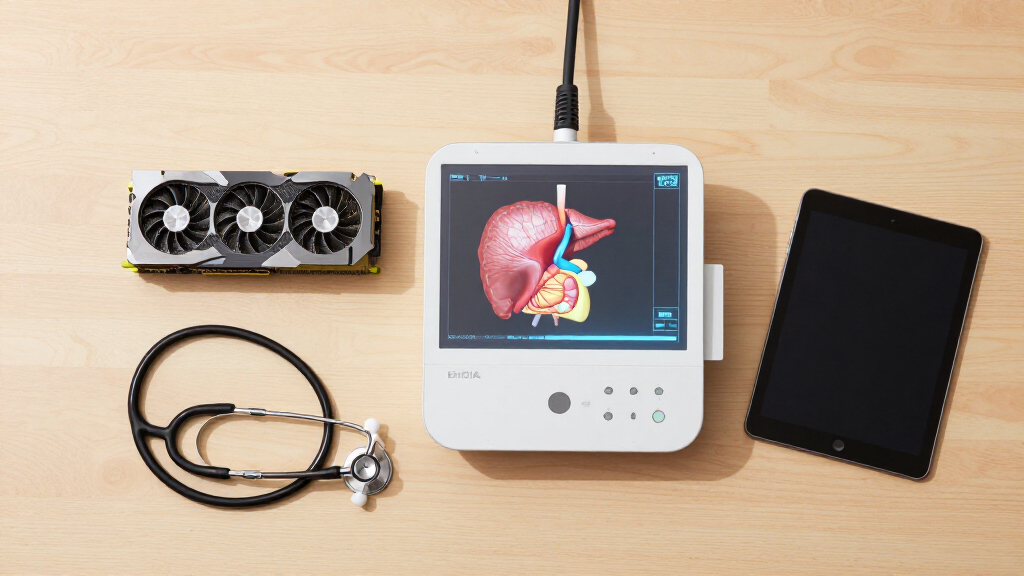
NVIDIA has introduced Cosmos-H-Dreams, a real-time, action-conditioned generative simulator designed for surgical robotics. The system produces surgical video sequences from live robot commands, potentially enabling faster testing and development of control policies without physical experiments. For more details, see the original analysis on NVIDIA Cosmos-H-Dreams. This development could significantly impact surgical AI research and robotics testing, though independent validation and clinical applicability are still pending.
Cosmos-H-Dreams is a distilled version of NVIDIA’s earlier Cosmos-H-Surgical-Simulator, optimized for real-time operation on a single RTX PRO 6000 GPU. It processes robot actions sequentially, generating subsequent frames of a surgical scene as commands are received, supporting closed-loop control. NVIDIA states that it can be used for tabletop suturing tasks, integrating with systems like the Versius surgical platform, but has not provided detailed performance metrics such as latency or image quality.
The simulator learns visual dynamics from video data and robot kinematics, including unsuccessful attempts, to better represent real surgical environments. NVIDIA claims that this approach could reduce reliance on costly physical testing and manual physics modeling, offering a faster feedback loop for developers. This development is discussed in detail in the original analysis. However, the system is currently positioned as a research tool, with no announced clinical validation or safety testing.
While integration with surgical controllers like Versius has been demonstrated, there is no evidence yet that Cosmos-H-Dreams can autonomously control real surgical robots or predict clinical outcomes. For more context, see the detailed coverage in this analysis. The announcement highlights ongoing work with partners like CMR Surgical but emphasizes that the system’s performance and reliability are still under evaluation.
Potential Impact on Surgical Robotics Development
This development could accelerate surgical AI research by enabling faster, more cost-effective testing of control policies in simulated environments. If validated, it might reduce dependence on physical prototypes, lowering costs and safety risks. However, the current lack of independent validation and detailed performance metrics means its immediate clinical applicability remains uncertain.
As an affiliate, we earn on qualifying purchases.
Advances in Surgical Simulation and NVIDIA’s AI Efforts
NVIDIA’s previous work with Cosmos-H-Surgical-Simulator supported offline policy evaluation and synthetic data generation, but lacked real-time capabilities. The new Cosmos-H-Dreams advances this by enabling streaming, real-time video generation from robot commands, aiming to bridge the gap between simulation and physical control. The system builds on NVIDIA’s broader push into AI-driven simulation and robotics, aligning with industry trends toward digital twins and virtual prototyping.
Prior to this, surgical simulation has relied heavily on physics-based models, which are computationally expensive and difficult to generalize. NVIDIA’s video-based learning approach offers a new pathway, though it is still in early research stages and has yet to demonstrate clinical validation or safety in real-world settings.
“Cosmos-H-Dreams is a real-time, action-conditioned generative simulator for surgical robotics that can operate on a single RTX PRO 6000 GPU.”
— NVIDIA spokesperson
As an affiliate, we earn on qualifying purchases.
Unverified Performance and Validation Metrics
The announcement does not include specific data on frame rate, latency, or image quality, nor does it provide independent testing results or comparisons with existing simulators. It remains unclear how well the system maintains coherence over extended use, how errors might accumulate, or how it performs across different hardware setups. The clinical relevance and safety of the generated videos have not been established through peer-reviewed studies.
surgical video simulation software
As an affiliate, we earn on qualifying purchases.
As an affiliate, we earn on qualifying purchases.
Next Steps for Validation and Clinical Testing
Future efforts will likely focus on rigorous validation of Cosmos-H-Dreams in real surgical scenarios, including testing on physical robots and assessing transferability of policies from simulation to hardware. Independent research will be needed to evaluate performance metrics, safety, and accuracy before considering clinical applications. NVIDIA may also expand hardware support and clarify access terms in upcoming releases.
As an affiliate, we earn on qualifying purchases.
Key Questions
What is NVIDIA Cosmos-H-Dreams?
It is an action-conditioned generative simulator that produces surgical video sequences from live robot commands and initial images, aiming to support real-time control and testing.
Can Cosmos-H-Dreams control real surgical robots autonomously?
While integrated with systems like Versius, there is no evidence it can operate autonomously in clinical settings. It currently functions as a simulation and development tool.
What hardware does the simulator require?
NVIDIA states it runs in real time on a single RTX PRO 6000 GPU, but performance on other hardware has not been detailed.
Is Cosmos-H-Dreams validated for safety or clinical accuracy?
No, the system is still in research stages, with no peer-reviewed validation or clinical testing reported.
When will this technology be available for clinical use?
There is no announced timeline; further validation and regulatory approval will be necessary before clinical deployment.
Source: ThorstenMeyerAI.com
Halloween Picks
halloween
As an affiliate, we earn on qualifying purchases.