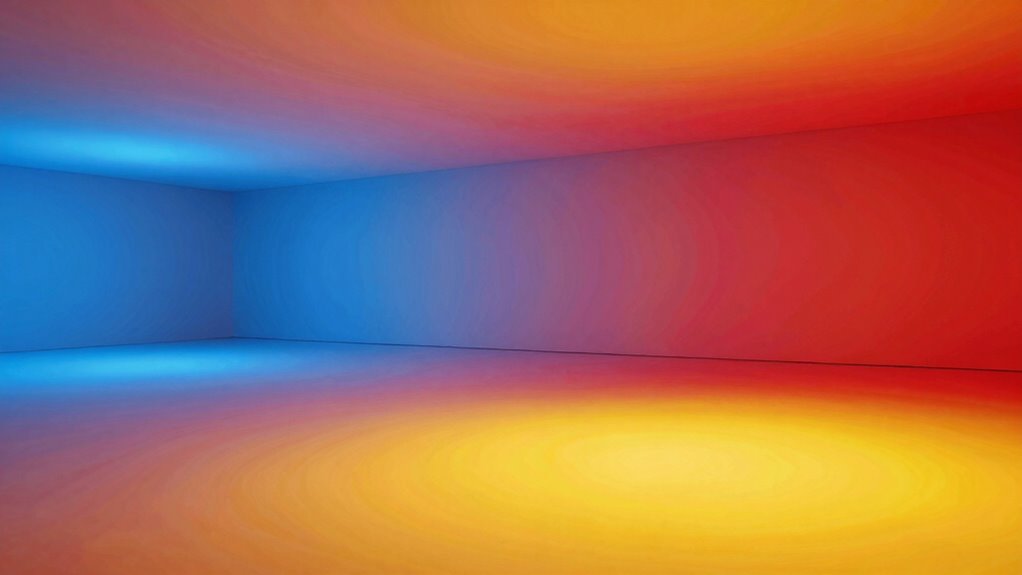

Color drenching changes how you perceive space by using bold hues to influence size, depth, and mood. Warm colors like reds and oranges tend to make a room feel smaller and more intimate, while cool shades like blues and greens can make it seem larger and more open. It’s about how you use color to alter visual cues and emotional responses, shaping your overall experience of a space. Keep exploring, and you’ll discover even more ways to manipulate perception through color.

Get the latest gadgets delivered free with Prime
- Fast, free delivery on millions of items
- Prime Video, Amazon Music and more included
- Member-only deals all year
Key Takeaways
- Vibrant hues influence perceived size and spatial relationships, making rooms feel larger or smaller depending on color choices.
- Warm colors tend to create a cozy, intimate feel, while cool tones evoke openness and spaciousness.
- Uniform color application can alter depth perception, making narrow or low-ceilinged spaces seem more expansive.
- Contrasting or accent colors highlight specific spatial features, guiding visual focus and perception.
- Color psychology and visual cues combine to subconsciously shape emotional responses and spatial understanding.

Color drenching, the technique of immersing a space in bold, vibrant hues, markedly influences how we perceive its size and spatial relationships. When you choose to flood a room with intense colors, you’re not just making a visual statement; you’re actively shaping the way you experience the space. This approach taps into color psychology, where specific hues evoke emotions and reactions that directly impact your sense of openness, coziness, or confinement. Bright, warm colors like reds and oranges tend to energize, making a space feel more intimate and smaller, while cooler shades such as blues and greens can create a calming effect, expanding the perceived size of a room.
Color drenching transforms perception, making spaces feel larger or smaller through bold hues and emotional cues.
Understanding the role of spatial dynamics is essential when you decide to drench a space in color. Spatial dynamics refer to how visual elements, including color, influence your perception of volume, depth, and proportion. When a room is uniformly painted with a vibrant hue, your eyes are drawn to the expansiveness of that color, which can either compress or extend the feeling of space. For example, a single bold color across all walls might make a narrow room appear wider or a low-ceilinged room feel more open. Conversely, contrasting colors or strategic use of accent walls can emphasize certain spatial features, guiding your perception and movement within the space.
By immersing a room in a dominant color, you also manipulate the room’s energy and mood, which influences how you mentally process its size. Bright reds and yellows tend to energize and close in, making you feel more contained, while cool tones like teal or lavender can give an impression of greater airiness. Your brain responds to these stimuli, adjusting your perception of spatial relationships based on the emotional cues the colors send. This is why color drenching can be so powerful—it’s not just about aesthetics but about influencing how you experience the environment on a subconscious level.
Ultimately, when you employ color drenching in interior design, you’re actively engaging with the principles of color psychology and spatial dynamics. You control the emotional tone and visual flow of a space, making it feel larger, smaller, warmer, or cooler. The key lies in understanding how bold hues interact with your perception, allowing you to craft environments that feel just right—whether you want to create intimacy or a sense of spaciousness. Through deliberate color choices, you shape not only the look but the very perception of the space itself.
As an affiliate, we earn on qualifying purchases.
Frequently Asked Questions
How Does Color Drenching Affect Emotional Responses in a Space?
Color drenching affects your emotional responses by triggering specific emotional triggers through bold, immersive hues. When you’re surrounded by intense colors, it can boost your mood or evoke feelings of calm or excitement, depending on the shades used. This technique enhances your overall mood, making the space feel more lively or soothing. By strategically using color drenching, you can shape emotional reactions and create an environment that fosters positive mood enhancement.
Are Certain Colors More Effective Than Others in Altering Perception?
Bright reds and fiery oranges grab your attention instantly, making spaces feel energetic and lively, while calming blues and gentle greens evoke serenity and spaciousness. In color psychology, certain hues influence perception more powerfully, creating visual harmony or tension. You’ll find that bold, warm colors heighten intimacy, whereas cool, muted tones expand a room’s perceived size. Choosing the right colors allows you to manipulate space and mood, shaping how others experience your environment.
Can Color Drenching Influence the Perceived Size of a Room?
Yes, color drenching can influence how you perceive a room’s size. When you use harmonious colors that create visual balance, the space may feel larger or more open. Bright, light hues tend to expand the room, while darker shades can make it feel cozier or smaller. By carefully selecting colors that enhance visual harmony, you can manipulate the perceived size, making your space feel more balanced and inviting.
How Long Do the Effects of Color Drenching Last?
The effects of color drenching can last for days or weeks, depending on factors like color psychology and your environment. You might feel more energized or relaxed, but these sensations fade as you adjust. Maintaining design consistency helps prolong the psychological impact, creating a cohesive space that influences perception over time. So, your mood and environment play essential roles in how long the vibrant effects linger in your space.
Is Color Drenching Suitable for All Types of Interior Environments?
Color drenching isn’t suitable for all interior environments. You need to take into account color harmony and material compatibility to ensure it enhances the space rather than overwhelms it. In environments with busy patterns or mixed textures, drenching might clash or feel chaotic. For spaces with a cohesive design and harmonious color schemes, it can create a stunning, immersive effect. Always evaluate your materials and existing decor before applying this bold technique.
As an affiliate, we earn on qualifying purchases.
Conclusion
So, next time you walk into a room painted entirely in bold hues, remember, you’re experiencing color drenching firsthand. It’s fascinating that studies show spaces with vibrant colors can boost mood and even make areas feel larger or more intimate. In fact, color-drenched environments can influence your perception of space by up to 30%. By understanding this, you can intentionally use color to transform your surroundings and how you feel within them.
As an affiliate, we earn on qualifying purchases.
As an affiliate, we earn on qualifying purchases.
Halloween Picks
halloween
As an affiliate, we earn on qualifying purchases.