Portable power stations range from pocketable phone chargers to high-capacity units for home backup, and the right choice depends on what you need to run and for how long. I rank the BLUETTI AC180 as the best overall for its 1,152Wh LiFePO4 battery and 1,800W output, while the Jackery Explorer 300 suits lighter trips and the Jackery HomePower 3600 Plus targets larger backup needs. The main tradeoffs are capacity versus portability, output versus the size of appliances you can run, and battery longevity versus upfront simplicity. Smaller models are easier to carry but cannot power as much or for as long. Read on for the full comparison and a guide to matching a station to your devices and plans.

Get the latest gadgets delivered free with Prime
- Fast, free delivery on millions of items
- Prime Video, Amazon Music and more included
- Member-only deals all year
Complete the kit


Key Takeaways
- The BLUETTI AC180 leads the middle-capacity group: its 1,152Wh LiFePO4 battery and 1,800W output offer a stronger balance of appliance support and stored energy than compact 288–300Wh models.
- Capacity alone does not determine what a station can run: the 89.6Wh DaranEner and 112.3Wh ZEALOTT are aimed at small electronics, while higher-output models can support a broader range of devices.
- LiFePO4 appears across several size classes: options such as the Marsriva MP6 Plus, BLUETTI Elite 30 V2, and BLUETTI Elite 100 V2 let buyers weigh battery chemistry alongside capacity and output.
- Solar bundles suit buyers who want a matched starting setup: the Jackery Explorer 300 with 40W panel and ZeroKor 300W with 60W panel include panels, but their modest panel ratings are not a substitute for checking recharge expectations.
- The largest stations solve a different problem from travel units: the 3,584Wh Jackery HomePower 3600 Plus and 2,010Wh Anker SOLIX S2000 prioritize stored energy, while small units favor easier transport and shorter device charging sessions.
| Jackery Explorer 1000 v2 Portable Power Station |  | Best for Balanced Capacity and Portability | Battery capacity: 1,070Wh | Battery type: LFP | Running / surge output: 1,500W / 3,000W | VIEW LATEST PRICE | See Our Full Breakdown |
| ZEALOTT N66 Portable Power Station, 31,200mAh, 112.3Wh, 120W AC, 65W USB-C PD | 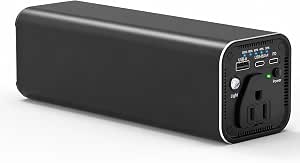 | Best for Lightweight Travel | Battery capacity: 112.3Wh / 31,200mAh | Battery type: Lithium-ion | AC output: 120W | VIEW LATEST PRICE | See Our Full Breakdown |
| MARBERO M82 Portable Power Station, 88Wh, 120W Surge, 24,000mAh |  | Best Compact Option with Built-In Light | Capacity: 88Wh / 24,000mAh | Output / surge wattage: 80W / 120W | Output ports: 8 | VIEW LATEST PRICE | See Our Full Breakdown |
| Jackery Explorer 300 Portable Power Station with 40W Solar Panel, 292Wh |  | Best Starter Solar Bundle | Capacity: 292Wh | Battery chemistry: LiFePO4 | Battery cycle life: Over 4,000 cycles to 70% capacity | VIEW LATEST PRICE | See Our Full Breakdown |
| BLUETTI AC180 Portable Power Station, 1152Wh LiFePO4 Battery, 1800W Output |  | Best for High-Output Backup | Battery capacity: 1,152Wh | Battery type: LiFePO4 | Running / peak output: 1,800W / 2,700W | VIEW LATEST PRICE | See Our Full Breakdown |
| Anker SOLIX S2000 Portable Power Station, 2,010Wh, 1,500W |  | Best for Long-Life, Mid-Size Backup | Battery capacity: 2,010Wh | Battery type: LiFePO4 | Continuous / peak output: 1,500W / 3,000W | VIEW LATEST PRICE | See Our Full Breakdown |
| Marsriva MP6 Plus Portable Power Station, 512Wh LiFePO4 Battery, 600W Output |  | Best Compact UPS Backup | Battery capacity: 512Wh | Battery chemistry: LiFePO4 | AC output waveform: Pure sine wave | VIEW LATEST PRICE | See Our Full Breakdown |
| Core 300W Portable Power Station, 192Wh LiFePO4 Battery |  | Best Lightweight Emergency Station | Battery capacity: 192Wh | Battery chemistry: LiFePO4 | AC output / surge: 300W / 600W | VIEW LATEST PRICE | See Our Full Breakdown |
| Jackery HomePower 3600 Plus Portable Power Station, 3584Wh, 3600W |  | Best for Expandable Home Backup | Battery capacity: 3,584Wh | AC output: 3,600W | Parallel output: 7,200W | VIEW LATEST PRICE | See Our Full Breakdown |
| 500W Portable Power Station, 519.48Wh |  | Best for Many Small Devices | Capacity: 519.48Wh | AC output: 500W pure sine wave, 110V | AC outlets: 2 | VIEW LATEST PRICE | See Our Full Breakdown |
| BLUETTI Elite 30 V2 Portable Power Station, 288Wh, 600W |  | Best for Fast-Charging Compact Backup | Capacity: 288Wh | Continuous output: 600W | Power Lifting Mode: Up to 1500W | VIEW LATEST PRICE | See Our Full Breakdown |
| DaranEner Portable Power Station, 89.6Wh LiFePO4 Battery, 100W Output |  | Best for Lightweight Device Charging | Battery capacity: 89.6Wh | Battery type: LiFePO4 | Maximum output: 200W | VIEW LATEST PRICE | See Our Full Breakdown |
| Jackery Explorer 300 Portable Power Station, 292Wh |  | Best Compact All-Rounder | Battery capacity: 292Wh | Battery chemistry: LiFePO4 | Peak output: 600W | VIEW LATEST PRICE | See Our Full Breakdown |
| BLUETTI Elite 100 V2 Portable Power Station, 1024Wh, 1800W |  | Best for Home Backup and Longer Trips | Battery capacity: 1024Wh | Battery type: LiFePO₄ | Surge output: 3600W | VIEW LATEST PRICE | See Our Full Breakdown |
| ZeroKor 300W Portable Power Station with 60W Solar Panel |  | Best Solar Starter Bundle | Maximum power station output: 300W | Included solar panel: 60W monocrystalline | Solar panel conversion efficiency: 20.5% | VIEW LATEST PRICE | See Our Full Breakdown |
| portable power station | Weight | Battery capacity |
|---|---|---|
| Jackery Explorer 1000 v2 Porta | 23.8 lb | 1,070Wh |
| ZEALOTT N66 Portable Power Sta | About 2.4 lb | 112.3Wh / 31,200mAh |
| MARBERO M82 Portable Power Sta | 3.2 lb (also listed as 1.04 kg) | — |
| Jackery Explorer 300 Portable | Listed as 7.5 lb for the Explorer 300; product information also lists 12.9 lb | — |
| BLUETTI AC180 Portable Power S | 37.4 lb | 1,152Wh |
| Anker SOLIX S2000 Portable Pow | 35.7 lb | 2,010Wh |
| Marsriva MP6 Plus Portable Pow | 15.7 lb | 512Wh |
| Core 300W Portable Power Stati | 8.8 lb | 192Wh |
| Jackery HomePower 3600 Plus Po | 77.2 lb | 3,584Wh |
| 500W Portable Power Station | 18 lb | — |
| BLUETTI Elite 30 V2 Portable P | 9.5 pounds | — |
| DaranEner Portable Power Stati | 2.54 pounds | 89.6Wh |
| Jackery Explorer 300 Portable | 7.1 pounds listed; description states 7.5 pounds | 292Wh |
| BLUETTI Elite 100 V2 Portable | 25 pounds | 1024Wh |
| ZeroKor 300W Portable Power St | — | Not specified |
More Details on Our Top Picks
Jackery Explorer 1000 v2 Portable Power Station
I’d choose the Explorer 1000 v2 for buyers who need more than phone and laptop charging but don’t want a full-size backup unit. Its 1,070Wh LFP battery and 1,500W running output can support a broader mix of camping gear and household essentials than the compact ZEALOTT N66, whose 120W AC limit rules out many appliances. At 23.8 pounds, the Jackery is still possible to move between a car and a campsite, though it is far heavier than that small option. The app adds charging controls, including a one-hour emergency mode, but that fast-charge setting must be enabled and isn’t the default. I’d also account for the separately sold, Jackery-compatible solar panels; unlike the Jackery Explorer 300 bundle, this package doesn’t include one.
Pros:- 1,070Wh LFP capacity and 1,500W running output cover more demanding uses than compact stations.
- Rated for over 4,000 cycles while retaining over 70% capacity.
- Three AC outlets plus USB and DC ports allow several devices to connect at once.
- App includes charging modes, including quiet overnight charging.
Cons:- At 23.8 pounds, it is much less convenient to carry than compact options such as the ZEALOTT N66.
- Solar panels are not included and compatibility is limited to Jackery panels.
- The one-hour emergency charge option requires activation in the app.
Best for: Campers and households seeking a mid-capacity station that can run higher-wattage essentials and charge several devices.
Not ideal for: Buyers who need a lightweight personal power bank, an included solar panel, or a station that can run appliances above its 1,500W output.
- Battery capacity:1,070Wh
- Battery type:LFP
- Running / surge output:1,500W / 3,000W
- Weight:23.8 lb
- Dimensions:12.87 × 8.82 × 9.72 in
- Charging time:1 hour with emergency charging enabled; 1.7 hours by default
- Ports:3 AC, 2 USB-C, 1 USB-A, 1 DC car port
- Solar panel:Not included; compatible only with Jackery solar panels
Our verdict“Choose the Explorer 1000 v2 if you want substantial portable capacity and useful output without moving up to a heavier station such as the BLUETTI AC180.”
ZEALOTT N66 Portable Power Station, 31,200mAh, 112.3Wh, 120W AC, 65W USB-C PD
The ZEALOTT N66 is the easiest pick here to carry as a personal electronics backup: it weighs about 2.4 pounds and comes with a protective case, charging cable, and wall charger. Its 65W USB-C PD output suits compatible laptops and tablets, while the 120W AC outlet adds a way to power small devices that need a standard plug. That flexibility distinguishes it from a basic power bank, but its 112.3Wh capacity and modest AC output are nowhere near the Jackery Explorer 1000 v2’s territory for appliances or longer outages. I’d treat it as a travel companion for low-draw electronics, not a camping station for equipment with substantial power needs. Its bundle is convenient, though a one-year warranty is a shorter stated coverage period than the BLUETTI AC180’s five years.
Pros:- About 2.4 pounds, making it far easier to carry than the larger Jackery Explorer 1000 v2.
- 65W USB-C PD supports compatible laptops and other higher-draw USB-C devices.
- Includes a protective case, Type-C cable, and PD wall charger.
- Combines AC, USB-C, USB-A, and USB outputs in a compact unit.
Cons:- The 120W AC output limits it to compatible low-power devices.
- 112.3Wh capacity is not suited to extended use or larger appliances.
- The stated warranty is one year.
Best for: Frequent travelers, students, and remote workers who want a carryable backup for compatible laptops, phones, and other low-power electronics.
Not ideal for: Campers or households needing to run appliances, power several devices for extended periods, or maintain backup power through a long outage.
- Battery capacity:112.3Wh / 31,200mAh
- Battery type:Lithium-ion
- AC output:120W
- USB-C PD output:Up to 65W
- USB-A output:18W
- Weight:About 2.4 lb
- Dimensions:8.37 × 2.82 × 2.82 in
- Included items:Carrying case, Type-C charging cable, PD wall charger, user manual
- Warranty:1 year
Our verdict“Pick the N66 for portable charging of low-power personal electronics, but choose the Explorer 1000 v2 if you need appliance-level output or longer runtime.”
MARBERO M82 Portable Power Station, 88Wh, 120W Surge, 24,000mAh
The MARBERO M82 earns its place as a compact camp and roadside companion, pairing an 88Wh battery with eight output ports and a three-level LED light with SOS mode. That lighting and port variety make it more campsite-oriented than the ZEALOTT N66, while the M82’s 80W output also sets a clear limit: it is for small electronics, not appliances. Its 3.2-pound listed weight is still easy to manage, though it is heavier than the N66. AC, battery, and compatible solar charging give it more ways to recharge than a wall-only setup, but the solar panel is not listed as included. I’d favor this over a larger station when space and a built-in light matter more than capacity; the Jackery Explorer 1000 v2 is the better fit for longer runtimes and higher-wattage loads.
Pros:- Eight output ports support several small devices at once.
- Built-in LED offers three brightness levels and an SOS mode.
- Can recharge by AC, battery, or a compatible MARBERO solar panel.
- Compact dimensions and a carry handle make it practical for vehicle kits and campsites.
Cons:- 80W output limits it to low-power devices and excludes many appliances.
- The 88Wh capacity is modest for extended off-grid use.
- Solar panels are compatible but not listed among the included items.
Best for: Minimalist campers and drivers who want a small electronics station with a built-in emergency light and multiple charging outputs.
Not ideal for: Buyers who need to power appliances, run devices for extended periods, or expect a solar panel to come in the box.
- Capacity:88Wh / 24,000mAh
- Output / surge wattage:80W / 120W
- Output ports:8
- Dimensions:6.5 × 4.6 × 3.1 in
- Weight:3.2 lb (also listed as 1.04 kg)
- Charging methods:AC, battery, solar
- Solar compatibility:MARBERO 30W or 60W solar panel
- LED light:3 brightness levels and SOS mode
- Safety features:Battery management system, short-circuit and overload protection, automatic shutdown
Our verdict“Choose the M82 for a small, light-equipped station for phones and other low-power gear, rather than for appliance backup.”
Jackery Explorer 300 Portable Power Station with 40W Solar Panel, 292Wh
I’d steer first-time buyers toward this Explorer 300 bundle if they want a modest station and a solar panel in the same package. The 292Wh battery and 300W rated output suit phones, cameras, and other smaller loads; the included 40W panel adds an off-grid charging option, though the listed time to reach 80% is about 7.5 hours. That is a slow refill compared with the BLUETTI AC180’s stated 500W solar input, but the Jackery is aimed at smaller, simpler setups rather than higher-demand backup. Its LiFePO4 battery is rated for over 4,000 cycles, a useful long-term attribute for frequent use. One listing issue makes portability harder to judge: it gives both 7.5 and 12.9 pounds as the station’s weight. I’d verify the actual package weight before buying.
Pros:- Includes a 40W solar panel, unlike the Explorer 1000 v2 package.
- 292Wh capacity and 300W rated output suit smaller electronics and light-duty use.
- LiFePO4 battery is rated for over 4,000 cycles to 70% capacity.
- Ports include 100W USB-C PD, USB-A, AC, and car output.
Cons:- The included 40W panel takes about 7.5 hours to bring the station to 80% charge.
- The listing gives conflicting weight figures of 7.5 and 12.9 pounds.
- 300W rated output is not enough for many household appliances.
Best for: New campers and occasional off-grid users who want a small-capacity station with a solar panel included.
Not ideal for: Buyers seeking fast solar replenishment, high-wattage appliance support, or a clearly stated package weight for strict portability planning.
- Capacity:292Wh
- Battery chemistry:LiFePO4
- Battery cycle life:Over 4,000 cycles to 70% capacity
- Included solar panel:40W
- Solar charging time:Approximately 7.5 hours to 80% with included panel
- Ports:2 AC, 1 USB-C PD (100W), 2 USB-A, 1 car port (120W)
- Weight:Listed as 7.5 lb for the Explorer 300; product information also lists 12.9 lb
- Dimensions:15.43 × 9.92 × 11.89 in
Our verdict“Choose this bundle for an entry-level solar setup with modest output, but look to the BLUETTI AC180 for greater capacity and faster listed solar input.”
BLUETTI AC180 Portable Power Station, 1152Wh LiFePO4 Battery, 1800W Output
The BLUETTI AC180 is the strongest fit here for buyers prioritizing appliance support and backup features over easy carrying. Its 1,152Wh LiFePO4 battery, 1,800W running output, and 2,700W peak output give it more headroom for demanding devices than the Jackery Explorer 1000 v2, though the capacity advantage over that Jackery is relatively small. The AC180’s standout differentiator is its 20 ms UPS transfer time, which makes it a more purpose-built choice for keeping compatible equipment powered during an interruption. Solar input is rated at 500W, but solar-only charging is still listed at 2.8–3.3 hours. At 37.4 pounds, it is substantially heavier than the Jackery and better suited to a home base, vehicle, or short carry than a hiking setup.
Pros:- 1,800W running output and 2,700W peak output suit more demanding loads than the Explorer 1000 v2.
- 1,152Wh LiFePO4 battery supports substantial portable backup capacity.
- 20 ms UPS transfer time provides a backup option for compatible equipment.
- Supports up to 500W solar input and includes AC, car, and solar charging cables.
Cons:- At 37.4 pounds, it is much less convenient to carry than the Explorer 1000 v2.
- Solar-only charging is listed at 2.8–3.3 hours, even with the stated solar input capability.
- Its capacity is only modestly greater than the Explorer 1000 v2 despite the larger size and weight.
Best for: Homeowners and van users who need higher output, a UPS function for compatible equipment, and a substantial battery for backup.
Not ideal for: Hikers or frequent travelers who need a light station, and buyers who want long runtime from solar alone without waiting several hours to recharge.
- Battery capacity:1,152Wh
- Battery type:LiFePO4
- Running / peak output:1,800W / 2,700W
- AC input:1,440W
- Solar input:500W
- UPS transfer time:20 ms
- Weight:37.4 lb
- Dimensions:13.39 × 9.72 × 12.48 in
- Warranty:5 years
Our verdict“Pick the AC180 when higher output and UPS backup matter more than carrying weight; choose the Explorer 1000 v2 for a lighter station with similar capacity.”
Anker SOLIX S2000 Portable Power Station, 2,010Wh, 1,500W
The Anker SOLIX S2000 balances substantial stored energy with a smaller footprint than the much larger Jackery HomePower 3600 Plus. Its 2,010Wh LiFePO4 battery and 1,500W continuous output suit extended outages, campsite appliances, and devices that benefit from a fast UPS switchover. Eight outlets give a household or work setup room to connect several loads, while six charging methods offer more ways to replenish it than simpler AC-and-solar units.
The tradeoff is portability: 35.7 pounds is a lot to carry, even if the dimensions are compact for its capacity. Its 400W solar input also means slower solar replenishment than a larger station designed for higher input. I would skip it for 12V-dependent setups because it has no 12V DC port; choose a lighter, smaller option such as the Marsriva MP6 Plus for modest device loads.
Pros:- 2,010Wh LiFePO4 battery with a claimed lifespan of up to 10,000 charge cycles
- 1,500W continuous output and 3,000W peak output support a broader range of loads than the Marsriva MP6 Plus
- Eight outlets and six stated charging methods provide flexible setup options
- UPS switchover under 10 ms can help keep compatible equipment powered during an interruption
Cons:- No 12V DC port for gear that requires that output
- 35.7-pound weight makes frequent carrying tiring
- 400W maximum solar input can limit how quickly it replenishes from panels
Best for: Campers and households seeking a long-life battery for multi-device backup without stepping up to a roughly 3.6kWh station.
Not ideal for: People who need a 12V DC output or regularly carry their station long distances; it lacks that port and weighs 35.7 pounds.
- Battery capacity:2,010Wh
- Battery type:LiFePO4
- Continuous / peak output:1,500W / 3,000W
- Total outlets:8
- Maximum solar input:400W
- Recharge methods:AC, solar, wall outlet, generator, alternator charger, and car outlet
- UPS switchover:Under 10 ms
- Weight:35.7 lb
- Warranty:5 years
Our verdict“Choose the S2000 for substantial, long-life backup and broad connectivity, but not for frequent hand-carrying or 12V DC use.”
Marsriva MP6 Plus Portable Power Station, 512Wh LiFePO4 Battery, 600W Output
The Marsriva MP6 Plus is the portable pick here for buyers who want a useful backup battery without hauling a large station. At 15.7 pounds, it is easier to move than the Anker SOLIX S2000, and its 512Wh capacity, 600W rated output, and 100W USB-C PD make it well suited to laptops, networking gear, lights, and smaller appliances. Its under-10-ms UPS transfer and pure sine wave AC output also suit sensitive electronics better than a basic battery pack.
That compactness comes with clear limits: 600W rules out many high-draw appliances, and 512Wh is far less reserve than the S2000 or Jackery HomePower 3600 Plus. AC charging takes 1.5 hours, while solar input reaches 300W, but the unit must stay dry. I would choose it for electronics backup and short trips, not as a household-scale outage solution.
Pros:- 512Wh LiFePO4 battery rated for 3,000+ cycles
- 100W USB-C PD supports compatible laptops and other fast-charging devices
- Pure sine wave AC output and UPS transfer under 10 ms suit electronics backup
- 15.7-pound weight is easier to manage than the Anker SOLIX S2000
Cons:- 600W rated output excludes many high-power appliances
- 512Wh capacity provides much less reserve than the Anker SOLIX S2000
- Must be kept away from rain and excessive moisture
Best for: Remote workers, apartment dwellers, and weekend campers who need portable backup for laptops, routers, lights, and other modest loads.
Not ideal for: Buyers powering high-wattage appliances or needing long-duration household backup; the 600W rating and 512Wh capacity are limiting.
- Battery capacity:512Wh
- Battery chemistry:LiFePO4
- AC output waveform:Pure sine wave
- AC recharge time:1.5 hours
- Solar input:300W
- USB-C PD:100W
- Weight:15.7 lb
- UPS transfer time:Under 10 ms
Our verdict“Pick the MP6 Plus for portable electronics backup and light-duty trips, not for running demanding appliances.”
Core 300W Portable Power Station, 192Wh LiFePO4 Battery
At 8.8 pounds, the Core 300W is the easiest station in this group to carry for short outings or keep close for emergency lighting. Its 192Wh LiFePO4 battery is modest, but the 300W pure sine wave output, six port types, and UPS switching up to 10 ms cover phones, small electronics, and compatible devices under 300W. A built-in LED with SOS and strobe modes adds practical value in a power cut that the Marsriva MP6 Plus does not emphasize.
This is not a scaled-down replacement for the Anker SOLIX S2000: its energy reserve is a small fraction, and high-wattage appliances are out of reach. AC charging reaches 80% in one hour, but solar panels are sold separately, and the supplied information gives conflicting dimensions. I would choose it for portability and short-duration essentials, not for running equipment through a prolonged outage.
Pros:- 8.8-pound weight makes it notably easier to carry than the Marsriva MP6 Plus
- LiFePO4 battery rated for 4,000+ charge cycles
- Six output ports include AC, USB-C, USB-A, and a car outlet
- UPS function and built-in SOS/strobe LED support basic emergency use
Cons:- 192Wh capacity and 300W output limit both runtime and appliance choices
- Solar panel is sold separately
- Provided dimensions differ between the description and specifications
Best for: Drivers, day-trippers, and households wanting a light emergency station for phones, lights, and small electronics.
Not ideal for: Campers or households expecting to power appliances or several devices for extended periods; 192Wh capacity and 300W output are restrictive.
- Battery capacity:192Wh
- Battery chemistry:LiFePO4
- AC output / surge:300W / 600W
- Total output ports:6
- USB-C:1 × 65W PD
- UPS switching time:Up to 10 ms
- AC recharge:0–80% in 1 hour
- Weight:8.8 lb
- Charge cycles:4,000+
Our verdict“Choose the Core 300W when low carry weight and emergency features matter more than long runtime or appliance power.”
Jackery HomePower 3600 Plus Portable Power Station, 3584Wh, 3600W
The Jackery HomePower 3600 Plus is the capacity leader in this batch, with 3,584Wh and 3,600W AC output for buyers whose needs go beyond phones and small appliances. Compared with the Anker SOLIX S2000, it offers substantially more stored energy and output, plus expansion to 21kWh per unit and 240V operation when units are connected in parallel. Hybrid AC+DC charging can replenish it in a stated two hours, while wheels and a telescopic handle make moving it easier than carrying a comparable battery by hand.
Its 77.2-pound weight remains a serious drawback when lifting into a vehicle or over steps, and the two listed outlets are fewer than the Anker’s eight. Solar panels are optional, and the larger capacity may be excessive for basic camping electronics. I’d favor this for home backup and expandable power, not for lightweight travel.
Pros:- 3,584Wh capacity and 3,600W AC output exceed the Anker SOLIX S2000’s energy and continuous output
- Expandable capacity and 240V operation are available with parallel units
- AC, solar, gas generator, and hybrid charging provide multiple replenishment options
- Wheels and telescopic handle ease rolling the heavy unit
Cons:- 77.2-pound weight makes lifting and loading difficult
- Only two outlets are listed
- Solar panels are optional rather than included
Best for: Homeowners and frequent RV users seeking high-output backup with room to expand capacity or add 240V operation.
Not ideal for: Campers prioritizing a lightweight, easily lifted station or buyers with only small device loads; it weighs 77.2 pounds and has substantial capacity.
- Battery capacity:3,584Wh
- AC output:3,600W
- Parallel output:7,200W
- Expandable capacity:Up to 21kWh per unit; up to 43kWh with multiple units
- Voltage:120V; 240V in parallel
- Charging methods:Hybrid AC+DC, AC, solar, and gas generator
- Weight:77.2 lb
- Outlets:2
- Warranty:5 years
Our verdict“Choose the HomePower 3600 Plus for high-output, expandable backup when its weight and larger footprint are acceptable.”
500W Portable Power Station, 519.48Wh
This 500W Portable Power Station prioritizes connection variety: two pure sine wave AC outlets sit alongside USB-A, 60W USB-C, DC, car, and wireless charging options. That makes it a flexible shared hub for phones, tablets, lights, and compatible small electronics, with up to 10 devices listed for simultaneous use. Its 519.48Wh capacity is close to the Marsriva MP6 Plus’s 512Wh, while the Marsriva has a stated LiFePO4 chemistry and a faster one-and-a-half-hour AC recharge.
The tradeoff is a 500W output ceiling, so this is not for high-demand appliances, and its 18-pound weight is more than the Marsriva’s. Wall charging takes six to seven hours, while a compatible solar panel is not included. The product data also warns that AC output can drain the battery when left on without a load. I’d pick it for mixed small-device charging, rather than as a fast-recharging or high-output station.
Pros:- Multiple output types include AC, USB-A, USB-C, DC, car, and wireless charging
- 519.48Wh capacity supports a range of small-device charging needs
- Pure sine wave AC output is suited to compatible electronics
- Wall, car, and compatible solar charging options provide flexibility
Cons:- 500W AC output rules out higher-power appliances
- 18-pound weight is heavier than the similarly sized Marsriva MP6 Plus
- Wall recharge takes six to seven hours and the solar panel is not included
- AC output can drain the battery when left on without a load
Best for: Campers and travel groups who need varied ports to charge phones, tablets, lights, and other low-draw devices together.
Not ideal for: Buyers running appliances above 500W or seeking quick AC recharging; its output is limited and wall charging takes six to seven hours.
- Capacity:519.48Wh
- AC output:500W pure sine wave, 110V
- AC outlets:2
- USB-A:3 QC3.0 ports, up to 18W each
- USB-C:Up to 60W PD
- Other outputs:2 DC ports, 1 car port, 1 wireless charger
- Maximum simultaneous devices:10
- Recharge methods:Wall outlet, car charger, or compatible solar panel
- Weight:18 lb
Our verdict“Choose this station for varied connections to several small devices, but look elsewhere for high-output appliances or faster recharging.”
BLUETTI Elite 30 V2 Portable Power Station, 288Wh, 600W
The Elite 30 V2 is a strong fit when portability matters but a small battery alone is not enough. At 9.5 pounds, it is heavier than the 7.1-pound Jackery Explorer 300, but it offers twice the continuous output at 600W and can reach 80% charge in about 45 minutes from wall power. That quick refill is useful when outages are brief or departure time is close. Its UPS switchover of up to 10 ms also suits basic backup for sensitive electronics. Power Lifting Mode can support some higher-wattage loads, but it does not turn this into a high-capacity station: the 288Wh battery can run down quickly, and the 1500W figure applies only in that mode. I’d choose it over the smaller DaranEner when AC output and backup features matter more than minimum weight.
Pros:- 600W continuous output gives it more room for AC-powered devices than the Jackery Explorer 300.
- Reaches 80% charge in about 45 minutes with wall power.
- UPS switchover of up to 10 ms supports short interruptions for connected electronics.
- AC, solar, and car charging options suit travel and backup use.
Cons:- The 288Wh battery limits runtime for appliances and other sustained loads.
- The 1500W Power Lifting Mode is not the continuous output rating.
- At 9.5 pounds, it is heavier than some similarly sized compact stations.
Best for: Campers and apartment residents who want a carryable station for phones, laptops, small appliances, and brief UPS-style backup.
Not ideal for: Buyers who need to run high-wattage appliances for long periods or want the lightest possible device; its 288Wh capacity is modest and it weighs more than the Jackery Explorer 300.
- Capacity:288Wh
- Continuous output:600W
- Power Lifting Mode:Up to 1500W
- Weight:9.5 pounds
- Dimensions:9.8 × 7 × 6.6 inches
- Wall charging:380W; adjustable to 200W
- Wall charge time:0–80% in 45 minutes; 0–100% in 70 minutes
- UPS switch time:≤10 ms
Our verdict“Choose the Elite 30 V2 if fast wall charging, stronger continuous output, and UPS backup matter more than maximum runtime or the lowest carry weight.”
DaranEner Portable Power Station, 89.6Wh LiFePO4 Battery, 100W Output
At just 2.54 pounds, the DaranEner is the easiest option here to pack for a short outing, though its 89.6Wh battery makes it a device charger first and a power station for small loads second. Two AC outlets rated at 100W each give it more flexibility than a basic USB battery pack, while its USB-C, USB-A, and DC outputs let several small devices connect at once. It supports wall, car, USB-C PD, and compatible solar charging, but solar panels and suitable cables are not included. Compared with the ZeroKor 300W bundle, this model is much easier to carry and specifies LiFePO4 chemistry, but it lacks the included solar panel and has less output headroom. I’d skip it for appliances: the 200W maximum output and small capacity put a clear ceiling on its use.
Pros:- Weighs 2.54 pounds and has a compact footprint for travel.
- Multiple USB, AC, and DC connections support charging several small devices.
- Supports wall, car, USB-C PD, and compatible solar charging.
- LiFePO4 battery and a three-year manufacturer warranty are specified.
Cons:- 89.6Wh capacity and 200W maximum output limit runtime and device choice.
- Solar panels and compatible charging cables are not included.
- Its two AC outlets are each rated at 100W, limiting AC-powered equipment.
Best for: Backpackers, day campers, and travelers who need a very light source for phones, cameras, and other low-power electronics.
Not ideal for: Buyers planning to power appliances, run devices for extended periods, or recharge from solar without purchasing compatible panels and cables separately.
- Battery capacity:89.6Wh
- Battery type:LiFePO4
- Maximum output:200W
- AC outlets:2 × 100W
- USB-C ports:2 (45W PD / 15W)
- Weight:2.54 pounds
- Recharge time:0–80% in 1.5 hours
- Warranty:3 years
Our verdict“Pick the DaranEner for light-duty travel charging when low weight matters more than appliance support or long runtime.”
Jackery Explorer 300 Portable Power Station, 292Wh
The Jackery Explorer 300 balances a useful 292Wh capacity with a relatively light, 7.1-pound body, making it a practical middle ground for weekend camping and basic device backup. Its 300W rated output is lower than the BLUETTI Elite 30 V2’s 600W, so the Jackery is less suited to heavier AC loads; in return, it is lighter and offers a clear mix of AC, USB-C, USB-A, and car-port connections. The listed LiFePO4 chemistry and over 4,000-cycle rating to 70% capacity give buyers useful battery-life information. Solar charging is supported, but the panel is sold separately, unlike the ZeroKor bundle that includes a 60W panel. Product data gives conflicting weight and dimension figures, so I’d verify the exact listing before buying if a tight packing fit matters.
Pros:- 292Wh capacity suits device charging and some light-duty backup.
- At the listed 7.1 pounds, it is lighter than the BLUETTI Elite 30 V2.
- Includes AC, 100W USB-C PD, USB-A, and car-port connections.
- LiFePO4 battery is rated for over 4,000 cycles to 70% capacity.
Cons:- 300W rated output is lower than the BLUETTI Elite 30 V2’s 600W.
- Compatible solar panel is sold separately.
- Product details give conflicting weight and dimension measurements.
Best for: Campers and travelers who want a modestly sized station for electronics and light AC loads, with solar charging available as an optional add-on.
Not ideal for: Buyers who need more than 300W of rated output, an included solar panel, or certainty about the unit’s exact listed dimensions and weight.
- Battery capacity:292Wh
- Battery chemistry:LiFePO4
- Peak output:600W
- AC outlets:2
- USB-C port:100W USB-C PD
- Weight:7.1 pounds listed; description states 7.5 pounds
- Solar charging:About 80% in 2.8 hours with a 100W panel; panel sold separately
Our verdict“Choose the Explorer 300 for a lightweight, familiar mix of ports and moderate capacity, provided its 300W output is enough for your devices.”
BLUETTI Elite 100 V2 Portable Power Station, 1024Wh, 1800W
With a 1024Wh battery and 1800W rated AC output, the Elite 100 V2 is the clear step up when a compact station’s runtime and power ceiling are too restrictive. It can support a wider range of household devices than the 288Wh BLUETTI Elite 30 V2, while its 25-pound weight keeps it more movable than a large home-backup unit. Wall charging reaches about 80% in 45 minutes, and a UPS switchover of up to 10 ms adds value for short outages. App connectivity and silent mode offer more control than the simpler Jackery Explorer 300, though that smaller Jackery is easier to carry for casual outings. The tradeoff is bulk: 25 pounds is portable between rooms or to a vehicle, but not a carefree carry for long walks. Vehicle fast charging also needs a separate BLUETTI Charger 1.
Pros:- 1024Wh capacity and 1800W rated output offer substantially more runtime and appliance support than compact models.
- Reaches about 80% charge in approximately 45 minutes with AC charging.
- UPS switchover of up to 10 ms supports backup for connected electronics.
- Wi-Fi and Bluetooth connectivity provide app control.
Cons:- At 25 pounds, it is less convenient to carry on foot than the Jackery Explorer 300.
- Vehicle fast charging requires a separate BLUETTI Charger 1.
- Four total power outlets may constrain setups with many AC devices.
Best for: Households and car campers who need to power several devices or selected appliances for longer periods and value fast recharging and UPS backup.
Not ideal for: Backpackers and buyers seeking a lightweight station for occasional phone charging; this 25-pound unit is larger than compact options and vehicle fast charging needs an additional charger.
- Battery capacity:1024Wh
- Battery type:LiFePO₄
- Surge output:3600W
- Power Lifting:2700W
- Weight:25 pounds
- AC charging:Up to 80% in approximately 45 minutes
- Connectivity:Wi-Fi and Bluetooth
Our verdict“Choose the Elite 100 V2 when longer runtime and 1800W output are worth carrying a 25-pound station.”
ZeroKor 300W Portable Power Station with 60W Solar Panel
The ZeroKor’s main advantage is straightforward: it arrives with a 60W monocrystalline solar panel, so buyers can start exploring solar recharging without assembling a separate panel-and-station kit. Its 300W maximum output and mix of AC, DC, and USB connections suit small electronics and modest loads, while the flashlight’s reading and SOS modes add a useful camping feature. Compared with the Jackery Explorer 300, it includes solar hardware but does not provide a stated battery capacity, making runtime harder to estimate before purchase. That missing figure is a substantial limitation for anyone planning around specific devices or outage durations. The panel’s junction box is also not waterproof, so it needs protection from rain. I’d favor this bundle for occasional outdoor use, not as a dependable choice for prolonged backup or demanding equipment.
Pros:- Includes a 60W monocrystalline solar panel rather than requiring a separate panel purchase.
- Can recharge from an AC outlet, 12V car outlet, or compatible solar input.
- AC, DC, and USB outputs support a variety of small devices.
- Built-in flashlight includes reading and SOS modes.
Cons:- Battery capacity is not specified, making runtime difficult to estimate.
- The solar panel junction box is not waterproof.
- Maximum output is 300W, so higher-demand devices are unsupported.
Best for: Occasional campers and outdoor users who want a basic station-and-panel bundle for small electronics and understand that the battery runtime is unspecified.
Not ideal for: Buyers who need predictable runtime, weather-ready solar hardware, or power for devices above 300W; the capacity is not stated and the panel junction box is not waterproof.
- Maximum power station output:300W
- Included solar panel:60W monocrystalline
- Solar panel conversion efficiency:20.5%
- AC outlets:2; 300W maximum
- DC output:9V–12.6V, 10A maximum
- USB ports:3 × 5V/3A
- Recharge methods:AC outlet, 12V car outlet, or compatible 13V–23V solar panel
- Battery capacity:Not specified
Our verdict“Pick the ZeroKor as a basic solar starter kit for small loads, but skip it if you need a stated capacity or weather-protected panel hardware.”

How We Picked
I compared the 15 models by the factors that shape day-to-day usefulness: usable capacity, rated output, battery chemistry, portability, charging options, and included accessories. Capacity indicates how much energy a station stores, while output helps show which devices it can support at once; neither figure alone tells the whole story. I also separated compact electronics-focused units from mid-size stations and large backup-oriented models rather than treating them as direct substitutes.
The ranking favors products with a clear balance of capability and practical fit, not simply the biggest battery or highest wattage. LiFePO4 models receive consideration for buyers weighing battery longevity, while bundled solar panels matter most to shoppers who want a ready-made entry point and should still check recharge speed. Products with limited capacity or output rank lower for broad use, though they can be sensible picks for lightweight travel or small electronics. Where the provided specifications do not establish a feature, I avoid treating it as a proven advantage.
Factors to Consider When Choosing Portable Power Stations
Before choosing a station, I would start with the devices you need to power and the setting where you will use it. These checks help prevent two common mismatches: buying a compact unit that cannot handle a planned appliance, or carrying a heavy reserve of capacity that your trips do not need.
Match Output to Your Devices, Not Just Their Labels
A station’s wattage rating describes the power it can deliver, while a device’s draw determines whether it can run from that station. Check the rated input for each device and account for startup surges from equipment with motors, since a unit’s surge rating may differ from its continuous output. Add the loads you might run at the same time; a station that can power each device individually may still fall short when they operate together. Avoid choosing by a broad phrase such as “runs appliances,” because appliance demand varies widely. If your main need is phones and laptops, prioritize the ports and output you will actually use rather than paying for a much larger AC rating.
Estimate Runtime With a Realistic Energy Budget
Capacity in watt-hours is a useful starting point, but it is not a promise of exact runtime at the outlet. Conversion losses, device behavior, and the station’s own operating needs reduce the energy available to a load. Make a short list of devices, their wattage, and the hours you expect to use them, then total their energy needs before selecting a size class. For intermittent devices, such as a laptop that cycles between heavy and light work, a simple maximum-draw calculation may overstate consumption. Leave a reserve for unexpected use rather than planning to drain the battery completely.
Decide How Much Portability You Will Actually Use
Higher capacity usually means a larger, heavier unit, so think about how often you will lift and transport it. A station that stays in a vehicle or a designated home backup spot can justify more stored energy than one carried to a campsite by hand. Check the product’s full dimensions and weight before ordering, and factor in any solar panel you plan to bring. Buyers sometimes focus on the station’s handle or compact shape while overlooking the effort of moving the complete setup. If portability is a priority, choose the smallest capacity that meets your real runtime needs.
Choose Battery Chemistry With Ownership Time in Mind
Battery chemistry can affect expected service life and how a station fits longer-term use, but it should not replace checking capacity, output, and warranty terms. Several models in this roundup use LiFePO4 batteries, including products from BLUETTI, Marsriva, and Core, giving buyers multiple sizes to compare within that chemistry. Ask how often you expect to cycle the battery and whether the maker provides clear care and storage guidance. A chemistry label by itself does not establish the quality of the full product or its support. Compare the complete specifications and use case rather than treating one battery type as a guarantee.
Treat Solar Charging as a System, Not a Panel Checkbox
An included solar panel can make setup simpler, but its wattage affects how quickly it can replenish a station under suitable conditions. The 40W and 60W bundled panels in this lineup pair with relatively modest stations, so buyers should check whether their expected recharge window fits their plans. Also confirm that the panel connector and input limits are compatible with the power station before adding a third-party panel. Sunlight, panel placement, and changing weather all affect real charging results. For backup planning, consider whether you can recharge from a wall outlet or vehicle as well as from solar.
Separate Emergency Backup From Everyday Power Needs
A portable station can support selected devices, but it does not automatically replace a home generator or provide power to an entire household. List the circuits or individual devices that matter during an outage and check both their running draw and total expected energy use. A large unit such as a 3,584Wh model serves a different role from a 288Wh travel station, yet even substantial capacity must be weighed against the loads and duration you expect. Avoid assuming that a high output rating means long runtime; wattage and stored energy answer different questions. For home backup, also check placement, recharging options, and the manufacturer’s instructions for safe operation.
Frequently Asked Questions
Is a 300Wh portable power station enough for a weekend trip?
It can be enough for a weekend centered on phones, cameras, lights, and limited laptop charging, but the answer depends on how many devices you bring and how often you recharge them. A 300Wh rating describes stored energy, not guaranteed usable energy at every outlet. Add up your likely consumption and leave some room for conversion losses and unexpected use. If you plan to run a cooler or other high-draw device for long stretches, compare its energy demand with a larger station instead. A compact unit is most convincing when portability matters more than powering appliances.
Can a portable power station run a refrigerator during an outage?
Some stations may support a refrigerator, but you need to check both its startup surge and its ongoing energy use against the station’s output and capacity. The higher-output models in this roundup are more plausible candidates than the sub-120Wh options, yet capacity still sets how long a refrigerator can run. Look for the refrigerator’s wattage or energy-use information and account for its on-and-off operating cycles. Leave room for other essential devices if you plan to share the station. For a longer outage, also plan how you will recharge the unit.
Should I choose a LiFePO4 station over a smaller conventional-battery model?
That choice depends on how often you expect to use and recharge the station, not on chemistry alone. Several LiFePO4 models here span compact, mid-size, and larger capacities, so you can compare chemistry without assuming you must buy the biggest unit. A smaller station may be easier to carry and adequate for electronics, while a LiFePO4 option may better fit frequent cycling if its full specifications and warranty meet your needs. Check the manufacturer’s cycle-life definition, storage guidance, and warranty terms before deciding. Also compare output and capacity, since a longer-lived battery cannot compensate for a station that is too small for your devices.
Are portable power stations with included solar panels a better choice?
A bundled panel can simplify compatibility and give a buyer a starting point for recharging away from an outlet. It is not automatically the better setup: panel wattage, expected sunlight, and the station’s solar input limits determine how useful the pairing will be. The Jackery Explorer 300 bundle includes a 40W panel, while the ZeroKor bundle includes a 60W panel, so buyers should compare those ratings with their recharge needs. If fast replenishment matters, check whether a larger compatible panel can be added and what connectors it requires. A bundle makes the most sense when convenience outweighs the need to choose panel components separately.
How do I choose between the BLUETTI AC180 and BLUETTI Elite 100 V2?
Both are high-output, roughly 1kWh-class choices, so compare their complete specifications, charging options, dimensions, and included features rather than relying on capacity alone. The AC180 is listed with 1,152Wh and 1,800W output; the Elite 100 V2 is listed with 1,024Wh and 1,800W output. That gives the AC180 a capacity advantage on the stated figures, while the Elite 100 V2 may suit a buyer whose preferred features or form factor better match its listing. Check the devices you plan to run and how long you need them powered. If your load is modest, a smaller unit may be easier to transport; if it is substantial, compare both against your runtime estimate.
Conclusion
For the broadest balance of stored energy and appliance output in this lineup, I recommend the BLUETTI AC180 as the best overall. The best value depends on the job: the BLUETTI Elite 30 V2 is a practical lower-capacity LiFePO4 choice, while the Jackery Explorer 300 offers a familiar compact format for travel. For best premium and extended backup, the Jackery HomePower 3600 Plus has the largest stated capacity here; choose it only if its size and role fit your plans. Beginners focused on phones and small electronics can start with the Jackery Explorer 300 or the bundled version with a 40W panel. For ultralight charging, compare the ZEALOTT N66 and DaranEner; for higher-output needs in a smaller footprint, look at the BLUETTI Elite 100 V2 or Marsriva MP6 Plus. Match capacity to runtime, output to device demand, and portability to how often you will move the station.
Halloween Picks
halloween
As an affiliate, we earn on qualifying purchases.