Art plays a powerful role in supporting LGBTQ+ rights by giving you a vibrant platform to celebrate identity and advocate for equality. Murals, symbols like rainbows, and images of resilience turn public spaces into banners of pride and resistance. These artworks challenge norms, inspire conversation, and foster a sense of belonging within the community. By understanding how visual culture promotes social change, you’ll see how creativity fuels ongoing advocacy and hope. Keep exploring to discover more about this impactful movement.
Key Takeaways
- Art amplifies LGBTQ+ voices, creating visibility and fostering acceptance through vibrant imagery and symbolic representations.
- Murals serve as powerful tools for social resistance, transforming public spaces into forums for activism and dialogue.
- Queer symbols reclaim identity and history, offering empowerment and affirmation within hostile or marginalized environments.
- Artistic expressions challenge discrimination, celebrate diversity, and inspire collective pride and resilience.
- Visual culture in LGBTQ+ art sustains social movements, promoting awareness, advocacy, and ongoing efforts for equality.

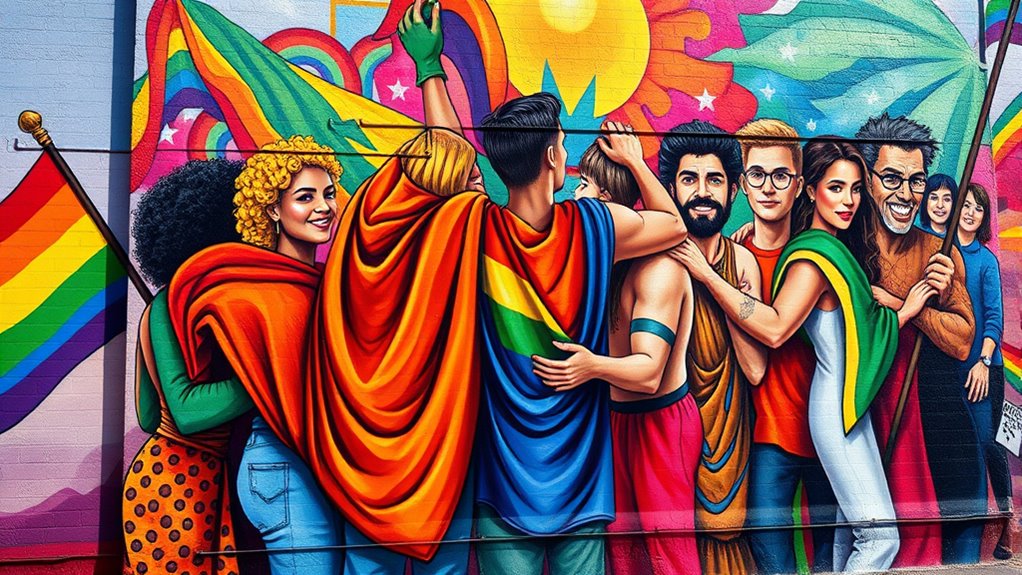
Art has long been a powerful tool for advocating LGBTQ+ rights, giving voices to those who are often marginalized and creating visibility where it’s most needed. Through vibrant imagery and meaningful symbols, artists express pride, resilience, and the desire for equality. Queer symbolism, such as rainbow flags, pink triangles, and gender symbols, serve as powerful visual cues that unite communities and communicate messages of acceptance. These symbols aren’t just decorative; they carry deep histories and collective struggles, transforming public spaces into statements of solidarity. When you see a rainbow mural or a pink triangle painted on a city wall, you’re witnessing more than just art—you’re witnessing a declaration of identity and a call for recognition.
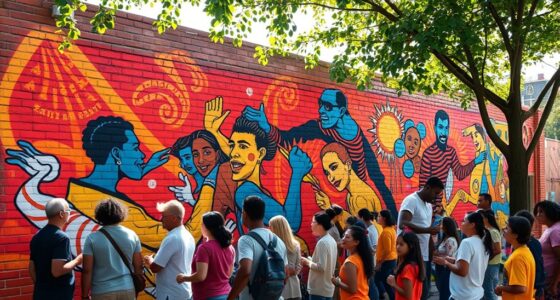
Activist murals are a compelling example of how art can serve as a form of resistance. These large-scale works often adorn urban landscapes, transforming blank walls into canvases for social commentary. You might encounter a mural depicting intertwined figures representing diverse identities or a powerful portrait honoring LGBTQ+ icons. Such murals do more than beautify; they challenge societal norms and demand visibility for marginalized voices. They turn public spaces into forums for dialogue, making activism accessible and immediate. When you walk past one, it’s impossible not to feel the energy and urgency behind the message. These murals often become landmarks within communities, inspiring pride and sparking conversations about rights and acceptance.
The use of queer symbolism in art isn’t accidental; it’s a deliberate act of reclaiming identity and history. For many LGBTQ+ individuals, these symbols are a source of comfort and empowerment, especially in hostile environments. Artists incorporate these symbols into murals, posters, and installations to create a visual language that speaks directly to the community and allies. You might see a mural featuring a rainbow intertwined with a phoenix, symbolizing rebirth and resilience, or a mural depicting a pride flag waving proudly in the wind. These images serve as visual affirmations that nobody should hide who they are or feel ashamed of their identity.
In essence, art—through queer symbolism and activist murals—becomes an act of defiance and hope. It challenges discrimination, celebrates diversity, and fosters a sense of belonging. When you engage with these works, you’re participating in a larger movement that uses creativity as a form of activism. You’re reminded that visibility and voice matter, and that art has the power to transform not only spaces but perceptions. Recognizing the power of symbolism can deepen our understanding of how visual culture sustains social movements. Through these vibrant expressions, the fight for LGBTQ+ rights gains a vivid, unyielding presence that encourages everyone to stand up, be proud, and keep pushing for equality.
Frequently Asked Questions
How Does Lgbtq+ Art Influence Societal Attitudes?
LGBTQ+ art influences societal attitudes by shaping public perception and fostering understanding. When you engage with these artworks, you challenge stereotypes and promote acceptance. The cultural impact is significant, as it highlights diverse identities and experiences, encouraging dialogue and empathy. Your exposure to this art can help break down prejudices, making society more inclusive and supportive of LGBTQ+ individuals, ultimately advancing equality and visibility.
What Are Some Lesser-Known Lgbtq+ Art Movements?
Did you know that lesser-known LGBTQ+ art movements make up over 30% of the community’s creative expressions? You’ll find fascinating examples in the Historical Revival movement, which reimagines past queer histories, and Subcultural Expressions, highlighting niche identities. These movements often fly under the radar but influence mainstream art by challenging norms, celebrating diversity, and preserving unique stories that might otherwise be overlooked. Immerse yourself in these vibrant, lesser-known worlds of LGBTQ+ art.
How Can Artists Ensure Their Work Promotes Inclusivity?
You can promote inclusivity in your art by actively practicing representation awareness and cultural sensitivity. Focus on depicting diverse identities authentically and respectfully, avoiding stereotypes. Engage with LGBTQ+ communities to understand their experiences better, and incorporate their stories thoughtfully. Use your platform to elevate marginalized voices, ensuring your work fosters understanding and acceptance. Remember, intentionality and openness are key to creating art that truly promotes inclusivity.
What Challenges Do Lgbtq+ Artists Face Today?
You might think society’s acceptance would be seamless, but LGBTQ+ artists still face cultural rejection and funding obstacles. Ironically, their vibrant voices challenge norms yet often get silenced or sidelined. You’re forced to navigate a landscape where your work isn’t always welcomed or financially supported, making it harder to fully express your identity. Despite progress, these persistent challenges test your resilience, pushing you to create despite the odds.
How Can Art Be Used in Lgbtq+ Advocacy Beyond Exhibitions?
You can use art in LGBTQ+ advocacy beyond exhibitions by organizing community workshops that foster dialogue and empowerment. Additionally, launching online campaigns allows you to reach a broader audience, spreading awareness and inspiring action. By actively engaging with your community and leveraging digital platforms, you create spaces for visibility and support, helping to challenge discrimination and celebrate identities in meaningful, accessible ways.
Conclusion
By embracing boldness and bravery through vibrant visuals, you become an essential voice for visibility and change. Your art advocates, amplifies, and affirms LGBTQ+ identities, inspiring others to stand up and speak out. With every stroke and sculpture, you spark solidarity, spreading strength and support. Remember, your creative contributions can challenge conventions, champion causes, and celebrate courage. Keep creating, connecting, and cultivating compassion—because your art is a powerful, passionate protest for progress.