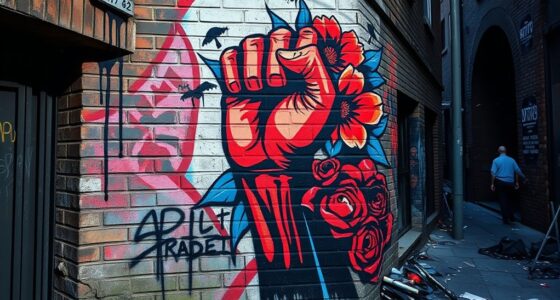
The Guerrilla Girls have spent decades exposing gender bias in art institutions through bold visuals and direct activism. They highlight the underrepresentation of women in galleries, museums, and exhibitions by sharing shocking statistics and questioning the dominance of male-centric narratives. Their anonymous masks remind you that this is about systemic issues, not individuals. If you want to understand how they push for change and challenge the status quo, there’s more to uncover below.
Key Takeaways
- The Guerrilla Girls expose gender bias in art institutions through bold visuals and sharp critiques highlighting women’s underrepresentation.
- They use anonymity and provocative statistics to draw attention to systemic inequalities in galleries, museums, and exhibitions.
- Their activism challenges male-centric narratives and advocates for increased recognition and inclusion of women artists.
- They aim to prompt institutional change by encouraging re-evaluation of policies, collections, and exhibition practices.
- Their efforts have sparked ongoing discussions and reevaluations regarding gender equality in the art world.

The Guerrilla Girls have been at the forefront of exposing gender bias in the art world for decades. Their work is a powerful example of feminist activism that challenges the persistent art world inequality faced by women artists. You might not realize just how ingrained this bias is, but these activists use bold visuals and sharp critique to highlight disparities that often go unnoticed or ignored. When you see their posters and performances, you can understand how they aim to dismantle the systemic barriers that prevent women from receiving equal recognition and opportunities in art institutions. They reveal that, despite progress, women remain underrepresented in galleries, museums, and major exhibitions, often overshadowed by their male counterparts. The Guerrilla Girls don’t just point out these issues—they confront them head-on, forcing the art community to confront its own complicity in perpetuating inequality.
Their approach to feminist activism is direct and unflinching. They use anonymity—wearing gorilla masks and adopting fake names—to focus attention on the issues rather than individuals. This tactic also symbolizes how women’s voices are often silenced or overlooked in the art world. Their posters display shocking statistics, such as the proportion of women artists in major museums versus the amount of funding and space allocated to their work. The messages are straightforward but impactful, making it impossible to ignore the disparities. They also critique the art world’s obsession with male-centric narratives, calling out the exclusion of women from the canon and questioning the value placed on their work compared to their male peers. Recognizing the representation of women in art is essential to understanding the ongoing gender bias; their campaigns highlight how underrepresentation persists despite increasing awareness.
Through their activism, you see how they aim to shift perceptions and inspire change. They challenge art institutions to reassess their collections, exhibitions, and policies, advocating for greater diversity and inclusivity. Their work encourages you to think critically about who gets represented and celebrated and who remains invisible. The Guerrilla Girls aren’t just pointing out problems—they’re actively demanding accountability. Their campaigns have sparked conversations about gender bias, prompting institutions to reevaluate their practices and policies. As a viewer or participant in the art world, you’re invited to question the status quo and support efforts that foster equality. Their relentless push for feminist activism continues to expose deep-rooted art world inequality, making sure that the contributions of women artists are recognized and valued equally.
Frequently Asked Questions
How Did the Guerrilla Girls Choose Their Anonymity?
You see, the Guerrilla Girls chose their anonymity through creative concealment to focus on their message rather than personal fame. By remaining anonymous, they practiced anonymous activism, which helps prevent personal bias and intimidation. Their masks and pseudonyms serve as symbols of collective action, allowing them to speak out boldly without fear. This approach amplifies their impact, emphasizing the importance of the cause over individual recognition.
What Specific Statistics Highlight Gender Disparity in Major Art Museums?
You might be surprised to learn that women constitute about 40% of museum attendance, yet only 20% of solo exhibitions feature female artists. Additionally, major museums often have less than 30% of their collections representing women. These statistics reveal stark gender disparities in artist representation, showing that despite equal attendance, women’s contributions are markedly underrepresented in major art institutions.
How Have Art Institutions Responded to the Guerrilla Girls’ Campaigns?
You see that art institutions have started some reforms, like increasing gender diversity and transparency, in response to the Guerrilla Girls’ campaigns. These efforts aim to improve institutional reforms and reshape public perception, showing a commitment to addressing gender bias. While progress varies, your awareness of these changes highlights how activism can push museums to become more inclusive and challenge longstanding biases in the art world.
What Are Some Notable Successes of the Guerrilla Girls?
Imagine breaking through a concrete wall—that’s what the Guerrilla Girls did with their feminist activism. Their notable successes include shining a spotlight on museum representation, revealing the gender disparities faced by women artists. They forced institutions to confront biases, inspiring ongoing conversations and reforms. Their bold posters and campaigns have become symbols of change, proving that persistent advocacy can crack open the doors of equality in the art world.
How Can Individuals Support Gender Equality in the Arts?
You can support gender equality in the arts by participating in activist initiatives and promoting community engagement. Attend events that raise awareness, amplify marginalized voices, and challenge gender bias. Share stories of female artists, advocate for inclusive policies, and support organizations committed to equality. Your active involvement helps create a more equitable environment, inspiring change and encouraging institutions to recognize and celebrate diverse contributions in the arts.
Conclusion
You can’t ignore the Guerrilla Girls’ bold fight against gender bias—they’re the echo in the silence of art’s injustices. Their activism is a spotlight, illuminating the shadows where inequality hides. By challenging the status quo, they remind you that change is possible when you dare to speak out. So, will you stand with them, breaking the silence and rewriting the story of art’s future? The power to transform lies in your voice.