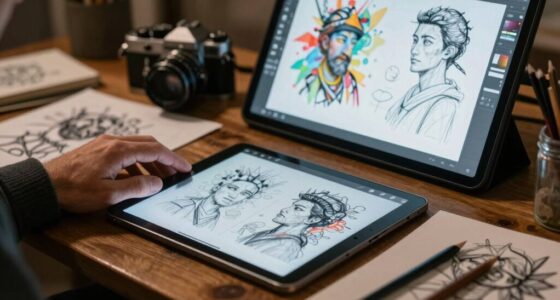
Neural style transfer allows you to turn your photos into artwork by blending the content of your image with the artistic style of famous paintings or textures. You select a style, upload your photo, and let neural networks analyze and merge the two, creating a unique masterpiece. Adjusting parameters gives you control over how much style or content appears. If you continue exploring, you’ll discover how this innovative technology can unleash endless creative possibilities for your images.
Key Takeaways
- Neural style transfer uses neural networks to merge the content of one image with the style of another creatively.
- It analyzes images separately to extract content features and stylistic elements for seamless fusion.
- Users can customize the balance between content and style, influencing the artistic outcome.
- The process enables instant, real-time transformation of photographs into artwork inspired by famous styles.
- It opens creative possibilities for reimagining images across various artistic genres and textures.
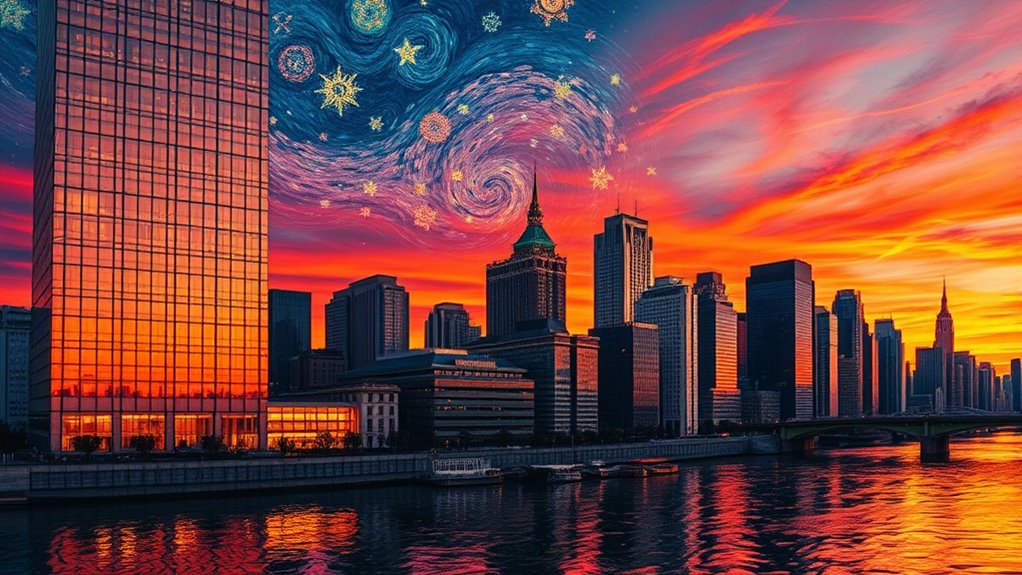
Neural style transfer is a groundbreaking technique that allows you to combine the content of one image with the artistic style of another, creating unique and visually compelling artwork. When you use this method, you’re essentially applying an artistic filter that transforms your photograph into a piece of art inspired by a specific style, whether it’s the brushstrokes of Van Gogh or the textures of a watercolor painting. This process hinges on style blending, where the neural network extracts stylistic elements from a style image and integrates them into your original photo, maintaining the core content while giving it a fresh, artistic flair. The result is a seamless fusion that feels both natural and creatively expressive.
Neural style transfer merges content and artistic style for unique, expressive artwork.
As you explore neural style transfer, you’ll notice how it empowers you to experiment with different artistic filters. Instead of manually editing images with complex software, this technique automates the process, allowing you to see instant transformations. You can choose from a vast library of styles—ranging from classical paintings to modern digital art—and apply them effortlessly. The key to successful style blending lies in balancing the content and style weights, which you can tweak to emphasize either the original photograph or the artistic style. This customization means you retain control over the visual outcome, enabling you to craft exactly the kind of artistic effect you desire.
Using neural style transfer is straightforward: you upload your photo and select a style image, then let the algorithm work its magic. During the process, the neural network analyzes both images, extracting features that define the content and style separately. It then synthesizes a new image by merging these features, ensuring that the content remains recognizable while adopting the stylistic qualities of your chosen artwork. This process is computationally intensive but quick enough to provide real-time previews, making it accessible even if you’re not an expert in digital editing.
Furthermore, understanding the underlying artistic style and how it influences the neural network’s feature extraction can help you achieve more refined and intentional results. The beauty of style blending through neural style transfer is that it opens up endless creative possibilities. Whether you’re transforming a simple landscape into a Van Gogh-like masterpiece or giving a portrait the vibrant textures of abstract art, you have a powerful tool at your fingertips. As you experiment with different styles and parameter settings, you’ll find that each image tells a new story, blending technical innovation with your artistic vision. Ultimately, neural style transfer isn’t just about editing photos—it’s about reimagining them as works of art, uniquely tailored to your creative expression.
Frequently Asked Questions
Can Neural Style Transfer Be Used on Video Footage?
Yes, you can use neural style transfer on video footage, but it’s challenging. You need to maintain temporal consistency to prevent flickering and avoid motion artifacts that can disrupt the visual flow. Techniques like frame-by-frame processing or adding temporal regularization help. Be prepared for increased computational demands, but with proper adjustments, you can achieve stylized videos that look cohesive and artistic without distracting inconsistencies.
What Are the Best Tools for Real-Time Style Transfer?
You’d think real-time style transfer is a myth, but with hardware acceleration and clever algorithms, it’s possible. Tools like NVIDIA’s StyleGAN and deep learning frameworks like TensorFlow and PyTorch, optimized for GPU use, deliver impressive results. They process images instantly, making artistic transformations seamless. So, you can now enjoy live video effects or instant photo edits, transforming your creative ideas into reality faster than you’d ever imagine.
How Does Style Transfer Handle Complex Textures?
You’ll find that style transfer handles complex textures by balancing texture complexity and detail preservation. Algorithms analyze intricate patterns, guaranteeing essential details aren’t lost while applying artistic styles. To achieve this, they often use multi-scale approaches, capturing both coarse and fine textures. This method ensures that even highly detailed textures maintain their integrity, resulting in a seamless blend of style and original texture without sacrificing richness or clarity.
Can Neural Style Transfer Be Personalized for Specific Artists?
While you may find neural style transfer naturally adaptable, it can be fine-tuned for artistic customization, allowing you to emulate specific artists more closely. By employing personalized algorithms, you can subtly capture unique brushwork, color palettes, and stylistic nuances. This tailored approach enhances the authenticity of your creations, giving your work a distinct voice that honors an artist’s vision, all through sophisticated, individualized adjustments within the neural network.
What Are Common Artifacts or Errors in Style Transfer?
You’ll often notice artifacts in images, like unintended streaks or distortions, when using style transfer. Color bleeding is a common error, where colors from the style image spill over into areas they shouldn’t, creating unnatural effects. These artifacts can occur due to mismatched textures or overly aggressive transfer settings. To minimize them, you can adjust parameters or refine the style and content images, resulting in cleaner, more realistic results.
Conclusion
By mastering neural style transfer, you can turn ordinary photos into stunning artworks that evoke emotion and imagination. Imagine blending the brushstrokes of Van Gogh with your favorite landscape, creating a masterpiece unique to you. This technology proves that art isn’t confined to galleries; it’s accessible and limitless. As you experiment, you’ll see how the boundary between technology and creativity dissolves, inspiring you to craft images that tell your personal story in vibrant, artistic ways.