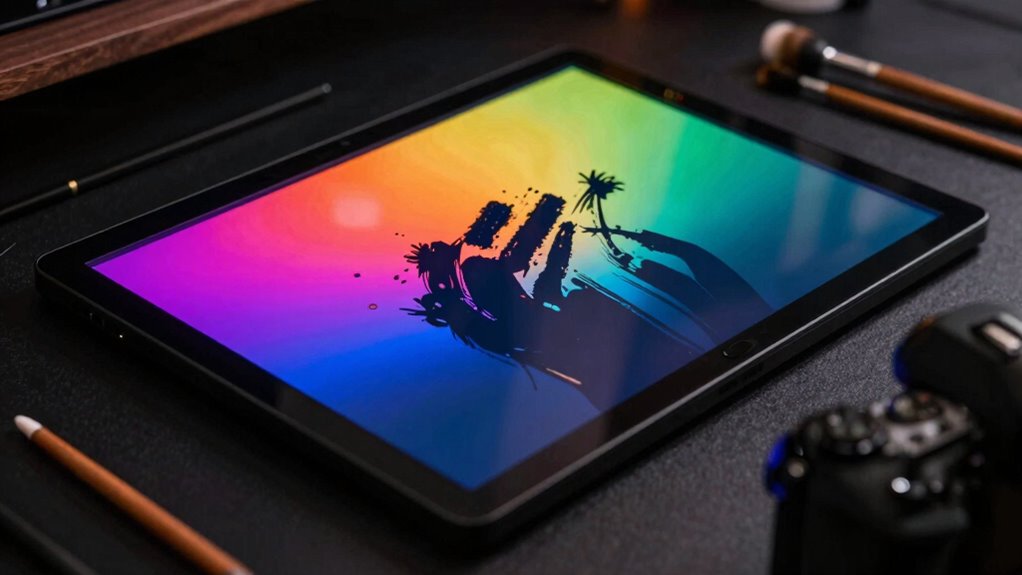

OLED screens offer stunning visuals with rich colors and deep blacks, making them ideal for artists who want vibrant, accurate displays. However, they come with risks like burn-in and shorter lifespan due to organic materials, especially with static images. While the visual benefits are impressive, you need to weigh potential durability issues and costs. If you keep exploring, you’ll discover how to maximize OLED’s strengths and minimize its drawbacks.
Key Takeaways
- OLED screens deliver exceptional color accuracy and deep blacks, enhancing artistic detail and visual realism.
- They are more prone to burn-in from static images, risking permanent ghosting on artwork displays.
- OLED displays are fragile and require careful handling to prevent damage and maintain long-term performance.
- The higher cost reflects their superior visual quality, making them a worthwhile investment for creative professionals.
- Regular calibration and cautious use can maximize OLED lifespan, balancing stunning visuals with potential risks.

If you’re an artist seeking precision and vibrant color, OLED screens offer a compelling solution. Their ability to produce rich, deep blacks and an extensive color range makes them stand out from other display types. When working on detailed illustrations or photo edits, color accuracy is essential. OLED technology excels here because each pixel emits its own light, allowing for more precise color reproduction and contrast. This means you can see subtle nuances in shades and tones, which is indispensable for achieving the exact look you envision. However, it’s necessary to consider durability concerns. OLED screens are more susceptible to burn-in, especially if you leave static images on the display for long periods. Over time, this can cause permanent ghost images, which might interfere with your work or overall viewing experience. While modern OLEDs have made strides in reducing this issue, it remains a factor to keep in mind if your workflow involves repetitive or static visuals. Additionally, organic material degradation can impact the lifespan and performance of OLED displays, making regular maintenance and careful use important. You might also notice that OLED screens tend to be more fragile than LCD counterparts. The organic materials used in their construction can degrade over time, leading to a gradual decline in brightness and color vibrancy. This degradation can be accelerated by exposure to direct sunlight or high temperatures, which are common in some creative environments. As an artist, you’ll want to weigh the benefits of the stunning visuals against the potential for long-term wear. Regular calibration and careful handling can mitigate some risks, but it’s worth noting that OLED panels might need replacement sooner than other display types. Another aspect to consider is the cost. OLED screens tend to be pricier, reflecting their advanced technology and superior color capabilities. While the investment can be justified if you prioritize visual fidelity and detail, it’s important to evaluate whether your budget aligns with these benefits. Additionally, many professional artists prefer OLED displays because they provide a more immersive experience, helping them to see their work as it truly appears in print or on high-quality displays. The deep blacks and vibrant colors can inspire creativity and give you confidence in your color choices.
Frequently Asked Questions
Are OLED Screens Suitable for Color Accuracy in Professional Art?
Yes, OLED screens can be suitable for color accuracy in professional art if you regularly perform color calibration. They offer high contrast and vibrant colors, which help you see pigment accuracy more clearly. However, keep in mind that OLEDs may experience color shifting over time, so consistent calibration is key to maintaining true-to-life hues and ensuring your artwork’s colors are precise and reliable.
How Do OLED Screens Compare to LCDS for Digital Painting?
You get what you pay for; OLED screens often outperform LCDs in digital painting. With higher pixel density and an incredible contrast ratio, OLEDs deliver vibrant, true-to-life colors and deeper blacks, making your artwork pop. LCDs, while reliable, may fall short in contrast and color richness. If you want precision and richness, OLEDs are the way to go, but be mindful of potential burn-in risks.
What Maintenance Is Required to Prolong OLED Screen Lifespan?
To prolong your OLED screen’s lifespan, you should regularly clean the screen gently with a soft, lint-free cloth to prevent dust buildup. Use screen cleaning solutions designed for electronics and avoid harsh chemicals. Additionally, manage power settings to reduce brightness when possible, as high brightness accelerates aging. Turn off your device when not in use, and enable auto-dimming features to help preserve the display over time.
Can OLED Screens Cause Eye Strain During Long Art Sessions?
Did you know that prolonged exposure to blue light can increase eye fatigue by up to 30%? OLED screens can cause eye strain during long art sessions because they emit intense blue light, which can lead to discomfort and fatigue. To reduce this, use blue light filters, take regular breaks, and adjust screen brightness. These steps help protect your eyes and make your creative sessions more comfortable.
Are There Affordable OLED Options for Beginner Artists?
Yes, there are affordable OLED options for beginner artists. You can find budget options like the ASUS ProArt or the AOC U28G2X, which are beginner-friendly screens offering excellent color accuracy and vibrant visuals without breaking the bank. These screens are perfect for those starting out, providing a great balance of quality and affordability, so you can immerse yourself in your art projects confidently without overspending.
Conclusion
In the end, OLED screens offer stunning visuals that can elevate your art, but they come with risks like burn-in. Did you know that nearly 30% of professional artists report experiencing screen burn-in after just a year of use? That’s a significant concern if you rely on your display for precise work. Weigh the vibrant colors against the potential for damage, and choose wisely to keep your art looking its best without compromising your investment.